Airlines around the region are leasing additional aircraft to cater for expected increase in Hajj pilgrims travelling to Saudi Arabia this season.
Flynas, Saudi Arabia’s first low-cost airline, expects the number of Hajj passengers using the airline this year to rise almost 10 percent to 200,000, according to an airline spokesperson, , up from 175,000 in 2018.
A Flynas spokesperson said that Hajj passengers will be flown from 17 countries using 13 additional leased aircraft.
Among the aircraft being used to transport pilgrims to Saudi Arabia are two Airbus A380s, which were recently used to transport Malaysian pilgrims from Kuala Lampur to King Abdulaziz Airport in Jeddah and Prince Mohammed bin Abdulaziz airport in Madinah.
Flynas is the first Saudi airline to utilise the A380.
Other leased aircraft used by Flynas this season include Boeing 747 and 767s, as well as – for the first time – Airbus A330neo aircraft.
Flynas signed a memorandum of understanding (MoU) with Airbus to purchase 20 A321XLR and A4321LR aircraft which have a long-range operational performance of up to 11 hours – 8,700 kilometres – in addition to fuel consumption savings of 30 percent.
Flynas said that the aircraft will allow the airline to take better advantage of upcoming Hajj and Umrah seasons as it works to realise its long-term goal of transporting 5 million pilgrims annually.
Airlines have announced additional aircraft for the Hajj season as pilgrim numbers rise.
In July, Saudia announced that it had added 17 aircraft to its 165-aircraft fleet to help transport 1.2 million domestic and foreign pilgrims from approximately 100 destinations for Hajj season.
According to Saudia, the number of pilgrims it expects to transport this year has risen by about 10 percent compared to 2018.
In the UAE, Abu Dhabi-based Etihad Airways said it will operate 15 extra flights between July 28 and August 25 to transport pilgrims to Madinah, in addition to six charter flights dedicated to the General Authority of Islamic Affairs, Sheikh Zayed Foundation and Abu Dhabi police.
This year we expect 25,000 Hajj travellers on our flights, with most originating in Australia, Pakistan, Morocco, United Kingdom, India and Indonesia, Houssam Weiss, head of UAE sales at Etihad Airways said recently.
Dubai carrier Emirates airline has expanded its services to Jeddah and Madinah with an additional 46 flights between July 27 and August 22, running in parallel to scheduled services to the two cities.
Although the airline declined to give expected passenger numbers, it has said it expects thousands from destinations including Pakistan, the United States, Senegal, the UK, Nigeria, Indonesia, South Africa and Ivory Coast.
In Bahrain, national carrier Gulf Air has announced 38 extra flights in addition to its regularly scheduled 3 to 4 daily flights to Jeddah and 7 weekly flights to Madinah.
In nearby Kuwait, Director General of Civil Aviation Yousif Al-Fawazan told local media that six Kuwait Airways aircraft are expected to transport 1,336 passengers for the Hajj season.
Emirates has announced that it will add 46 flights to facilitate pilgrims travelling to Saudi Arabia for Haj.
The expansion of flights will operate from July 27 to August 22 to support the Haj journey to the city of Mecca.
Adil Al Ghaith, Emirates’ Senior Vice President, commercial operations for the Gulf, Middle East and Iran said: Haj is one of the most significant events in the Muslim faith, and every year, Emirates’ primary focus is to help facilitate seamless travel for our Haj passengers as they converge on the Holy city of Mecca for this once in a lifetime journey.
The services will run in parallel with Emirates’ regularly scheduled services to Jeddah and Medina, and will be available to travellers holding a valid Hajj visa.
With the substantial increase of inbound air travel into the Kingdom during this period, Emirates’ 46 extra flights will ensure that we can cater to that demand, as well as provide tailored onboard services in line with the tenets of Hajj, said Al Ghaith.
This year, Emirates expects thousands of pilgrims to travel on its services for Hajj, coming from top inbound destinations such as Pakistan, the United States, Senegal, the UK, Nigeria, Indonesia, South Africa and Ivory Coast.
To ease the journey for Haj passengers, Emirates has commissioned a dedicated team to manage check-in and transfers for the seamless movement of travellers leaving from and transiting in Dubai.
On flights from Jeddah, Haj passengers can also bring up to five litres of Zamzam holy water which will be placed in special areas in the cargo hold.
Once up in the air, Haj travellers will benefit from special services to performing ablutions and other cleansing rituals, and will also be notified when they enter Al Miqat zones to ensure readiness for Ihram, the point when pilgrims enter a state of purity.
Tourism Observer
Showing posts with label Saudia. Show all posts
Saturday, 3 August 2019
Thursday, 21 June 2018
SAUDI ARABIA: SAUDIA Starts Flights From Vienna To Riyadh And Jeddah
Saudi Arabia’s largest airline SAUDIA started flights to Vienna, Austria from Riyadh and Jeddah. The carrier will fly to Riyadh before continuing on to Jeddah.
The new flight connection to Riyadh, the capital city of Saudi Arabia, as well as to Jeddah will be served four times a week deploying an Airbus A320.
The presence of SAUDIA at Vienna Airport means that one of the largest airlines in the Middle East is now represented here.
The airline links Vienna with Riyadh and Jeddah, the two most important cities for business and tourism in Saudi Arabia.
The new flight connection provides positive impetus, particularly for Austrian tourism and the popular travel destination of Vienna, says Julian Jäger, Joint CEO and COO of Vienna Airport.
Direct flight connections serve as a driving force for an increase in the number of passengers.
For this reason, the Vienna Tourist Board is pursuing an air service development strategy in cooperation with Vienna Airport in order to lure new airlines and flight connections.
The fact that SAUDIA decided in favour of Vienna Airport is an extremely gratifying development and will promote incoming tourism from the Arab region, in which we registered about 334,000 overnight stays in Vienna in 2017, explains Norbert Kettner, Managing Director of Vienna Tourist Board.
Effective immediately, SAUDIA offers four weekly frequencies from Vienna to Riyadh and Jeddah.
The aircraft leaves Jeddah at 7:40 a.m. on Tuesdays, Thursdays, Saturdays and Sundays and arrives in Riyadh at 9:20 a.m. The continuation of the flight from Riyadh to Vienna departs Riyadh at 10.10 a.m. and arrives Vienna at 2:40pm.
The return flight takes off from Vienna at 4 p.m. and lands in Riyadh at 10:20 p.m. and is scheduled to land in Jeddah at 01:10 a.m. on the following day.
This flight will be operated by an Airbus A320 aircraft.
Tourism Observer
The new flight connection to Riyadh, the capital city of Saudi Arabia, as well as to Jeddah will be served four times a week deploying an Airbus A320.
The presence of SAUDIA at Vienna Airport means that one of the largest airlines in the Middle East is now represented here.
The airline links Vienna with Riyadh and Jeddah, the two most important cities for business and tourism in Saudi Arabia.
The new flight connection provides positive impetus, particularly for Austrian tourism and the popular travel destination of Vienna, says Julian Jäger, Joint CEO and COO of Vienna Airport.
Direct flight connections serve as a driving force for an increase in the number of passengers.
For this reason, the Vienna Tourist Board is pursuing an air service development strategy in cooperation with Vienna Airport in order to lure new airlines and flight connections.
The fact that SAUDIA decided in favour of Vienna Airport is an extremely gratifying development and will promote incoming tourism from the Arab region, in which we registered about 334,000 overnight stays in Vienna in 2017, explains Norbert Kettner, Managing Director of Vienna Tourist Board.
Effective immediately, SAUDIA offers four weekly frequencies from Vienna to Riyadh and Jeddah.
The aircraft leaves Jeddah at 7:40 a.m. on Tuesdays, Thursdays, Saturdays and Sundays and arrives in Riyadh at 9:20 a.m. The continuation of the flight from Riyadh to Vienna departs Riyadh at 10.10 a.m. and arrives Vienna at 2:40pm.
The return flight takes off from Vienna at 4 p.m. and lands in Riyadh at 10:20 p.m. and is scheduled to land in Jeddah at 01:10 a.m. on the following day.
This flight will be operated by an Airbus A320 aircraft.
Tourism Observer
Saturday, 16 September 2017
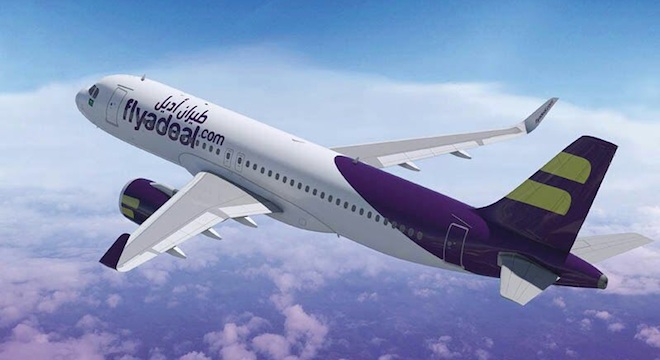
SAUDI ARABIA: Flyadeal Acquires Air Operator Certificate To Operate Domestic And International Flights.
Flyadeal, the newly established low fare airline in Saudi Arabia, is set to commence operations next week, on September 23, marking Saudi National Day.
The General Authority of Civil Aviation (GACA) on Wednesday issued the new carrier its Air Operator Certificate (AOC) at a ceremony held at GACA headquarters in Riyadh.
The ceremony was attended by Eng. Saleh Bin Nasser Al-Jasser, chairman of flyadeal and director general of Saudi Arabian Airlines (Saudia) Corporation, and chairman of the Board of Directors of Saudia Dr. Ghassan bin Abdulrahman Al-Shebl.
By obtaining the Air Operator Certificate, Flyadeal Airlines is now qualified to operate regular domestic and international flights to and from Saudi Arabia's airports.
Flyadeal is a Saudi low-cost airline based at King Abdulaziz International Airport in Jeddah. It is owned by Saudi flag carrier Saudia.
The airline expects to launch operations in the Saudi Arabia's national day which is 23rd September, 2017 with flights to domestic destinations.
Saudia, the flag carrier of Saudi Arabia, announced the creation of Flyadeal on 17 April 2016.
The venture is part of Saudia Group's SV2020 Transformation Strategy, which aims to elevate the group's units into world-class organisations by 2020.
Flyadeal will cater to domestic travellers, Hajj and Umrah pilgrims, and the rising number of tourists to Saudi Arabia, among other groups.
Flyadeal will initially operate flights to major domestic destinations, including Riyadh and Dammam, before expanding to regional markets.
As of September 2017 Flyadeal fleet consist of 2 Airbus A320-200 with a capacity of 180 ecomomy passengers.
Flyadeal has ordered for 6 other aircrafts.
Tourism Observer
The General Authority of Civil Aviation (GACA) on Wednesday issued the new carrier its Air Operator Certificate (AOC) at a ceremony held at GACA headquarters in Riyadh.
The ceremony was attended by Eng. Saleh Bin Nasser Al-Jasser, chairman of flyadeal and director general of Saudi Arabian Airlines (Saudia) Corporation, and chairman of the Board of Directors of Saudia Dr. Ghassan bin Abdulrahman Al-Shebl.
By obtaining the Air Operator Certificate, Flyadeal Airlines is now qualified to operate regular domestic and international flights to and from Saudi Arabia's airports.
Flyadeal is a Saudi low-cost airline based at King Abdulaziz International Airport in Jeddah. It is owned by Saudi flag carrier Saudia.
The airline expects to launch operations in the Saudi Arabia's national day which is 23rd September, 2017 with flights to domestic destinations.
Saudia, the flag carrier of Saudi Arabia, announced the creation of Flyadeal on 17 April 2016.
The venture is part of Saudia Group's SV2020 Transformation Strategy, which aims to elevate the group's units into world-class organisations by 2020.
Flyadeal will cater to domestic travellers, Hajj and Umrah pilgrims, and the rising number of tourists to Saudi Arabia, among other groups.
Flyadeal will initially operate flights to major domestic destinations, including Riyadh and Dammam, before expanding to regional markets.
As of September 2017 Flyadeal fleet consist of 2 Airbus A320-200 with a capacity of 180 ecomomy passengers.
Flyadeal has ordered for 6 other aircrafts.
Tourism Observer
Sunday, 11 June 2017
QATAR: Gulf Aviation May Change With Gulf Diplomatic Crisis
Qatar Airways has lost access to the airspace of Saudi Arabia, the United Arab Emirates, Bahrain, and Egypt and all flights from Doha to those countries; all of them have been canceled. Subsequently, those countries have been joined by Libya, Yemen, and the Maldives.
The loss of access is part of a broader cessation of diplomatic ties between those four states and Qatar due to concerns over purported Qatari sponsoring of terrorism and other issues.
It’s proper to understand the context of why this action was taken by the seven nations in question. Ostensibly, the claim is that these countries are unhappy with Qatar’s sponsoring of supposed terrorist activity, most notably Palestinian group Hamas and the Muslim Brotherhood. But there is clearly more at play.
As this Vox article points out, there are also tensions surrounding Qatar’s partially state-owned news agency Al Jazeera, and over Qatar’s relatively warm ties with the newly resurgent Iranian regime.
That last point speaks to what many consider to be the real driver behind this move—Saudi Arabia and the other Sunni nations fear an upset of the existing balance of power where Saudi Arabia is the regional leader of Sunni Islam and the de-factor regional kingpin of the Middle East.
Freed from sanctions by President Obama’s nuclear deal, the Shia Iranians are making a major push to get a seat at the table under the relatively reformist government of Hassan Rouhani. Saudi Arabia at least partially fears Iran’s rise and wants to bring Qatar more in line with other states in the region.
None of this has direct links to the aviation aspects per se, but it does suggest that even if Qatar gives in to some of Saudi Arabia’s demands such as cutting ties with Hamas and the Muslim Brotherhood, and shutting down Al Jazeera, it is not a given that Qatar will once again be given free reign in the airspace of its neighboring countries.
First off, the shutdowns affect about 55 daily flights from Qatar Airways’ Doha hub, more than 10% of the total.
This is broken down as 25 flights to the UAE across four destinations including Sharjah and Ras Al Khaimah, 20 flights to Saudi Arabia across ten destinations, six flights to Bahrain, and five flights to Egypt across three destinations.
Even if the number of seats isn’t quite 10% of Qatar Airways’ total traffic, these four spoke markets particularly the UAE and Saudi Arabia represent a non-trivial proportion of feed into Qatar Airways’ Doha hub. And there are certainly a few marginal routes whose business case will be impacted by not having this feed anymore.
The direct impact here is that 17 routes are being terminated, but the indirect impact on connectivity could kill another 10-15 or wipe out Qatar Airways’ profitability, forcing them to dip into the sovereign wealth fund to subsidize the airline.
The airspace impact for the moment is tangible but manageable so long as Bahrain continues to allow the one route through its airspace. The odd routings required by this airspace configuration add anywhere from fifty to several hundred miles to Qatar Airways’ flight paths, and that is a non-trivial cost impact,at first glance our estimate is $50-75 million on an annualized basis.
In the long run, this would also constrain Qatar Airways’ growth as that one pathway through Bahraini airspace is already bursting at the seams at Qatar Airways’ current level of operations.
Things get really crazy, however, if Bahrain blocks off that one pathway as well, thereby cutting Qatar off aerially from the rest of the world,remember the airspace ban also applies to other carriers operating in Qatar. At that point, Qatar Airways would have to shut down, or more likely its government would capitulate.
Now with the caveat as with the laptop ban that this could all be moot and resolved within 36 hours or so and certainly within a couple of weeks, either of the two scenarios would have a pretty massive impact on the shape of global aviation.
The traffic that currently flies Qatar Airways (26.6 million passengers) would be broken up and dispersed amongst the airline’s rivals in the Middle East Emirates, Etihad, and Turkish Airlines as well as back to home country carriers Saudia, Air India, etc.
Qatar Airways currently has 217 passenger aircraft on order (including 171 wide-bodies) and thus represents a nontrivial portion of Airbus and Boeing’s backlogs by aircraft value. The biggest adverse impact would be on the 777X,it has 60 on order or a fifth of that program’s backlog and the A350-1000 about a sixth of the program’s backlog.
To a lesser extent, the Airbus A380 and Boeing 777-300ER would also be affected, and those companies would lose at least hundreds of millions of dollars if not billions of dollars in market capital.
Even the less aggressive scenario of no service to the four feeder countries will likely trigger a series of deferrals and maybe the cancellation of 10% of the backlog,along with either the A320neo family or 737 MAX family order.
Here the major systemic risk is to the A380 and especially the 777X as the A350, and 787 have enough demand to fill deferred slots with other customers. On the airline side, the same effect would occur regarding traffic being redistributed to Middle Eastern rivals and to home country carriers,in this case Saudia and Egyptair are the big winners.
Once again that caveat is that this could all be resolved within a few days. But if things develop adversely, this has the potential to change the contours of global aviation.
The loss of access is part of a broader cessation of diplomatic ties between those four states and Qatar due to concerns over purported Qatari sponsoring of terrorism and other issues.
It’s proper to understand the context of why this action was taken by the seven nations in question. Ostensibly, the claim is that these countries are unhappy with Qatar’s sponsoring of supposed terrorist activity, most notably Palestinian group Hamas and the Muslim Brotherhood. But there is clearly more at play.
As this Vox article points out, there are also tensions surrounding Qatar’s partially state-owned news agency Al Jazeera, and over Qatar’s relatively warm ties with the newly resurgent Iranian regime.
That last point speaks to what many consider to be the real driver behind this move—Saudi Arabia and the other Sunni nations fear an upset of the existing balance of power where Saudi Arabia is the regional leader of Sunni Islam and the de-factor regional kingpin of the Middle East.
Freed from sanctions by President Obama’s nuclear deal, the Shia Iranians are making a major push to get a seat at the table under the relatively reformist government of Hassan Rouhani. Saudi Arabia at least partially fears Iran’s rise and wants to bring Qatar more in line with other states in the region.
None of this has direct links to the aviation aspects per se, but it does suggest that even if Qatar gives in to some of Saudi Arabia’s demands such as cutting ties with Hamas and the Muslim Brotherhood, and shutting down Al Jazeera, it is not a given that Qatar will once again be given free reign in the airspace of its neighboring countries.
First off, the shutdowns affect about 55 daily flights from Qatar Airways’ Doha hub, more than 10% of the total.
This is broken down as 25 flights to the UAE across four destinations including Sharjah and Ras Al Khaimah, 20 flights to Saudi Arabia across ten destinations, six flights to Bahrain, and five flights to Egypt across three destinations.
Even if the number of seats isn’t quite 10% of Qatar Airways’ total traffic, these four spoke markets particularly the UAE and Saudi Arabia represent a non-trivial proportion of feed into Qatar Airways’ Doha hub. And there are certainly a few marginal routes whose business case will be impacted by not having this feed anymore.
The direct impact here is that 17 routes are being terminated, but the indirect impact on connectivity could kill another 10-15 or wipe out Qatar Airways’ profitability, forcing them to dip into the sovereign wealth fund to subsidize the airline.
The airspace impact for the moment is tangible but manageable so long as Bahrain continues to allow the one route through its airspace. The odd routings required by this airspace configuration add anywhere from fifty to several hundred miles to Qatar Airways’ flight paths, and that is a non-trivial cost impact,at first glance our estimate is $50-75 million on an annualized basis.
In the long run, this would also constrain Qatar Airways’ growth as that one pathway through Bahraini airspace is already bursting at the seams at Qatar Airways’ current level of operations.
Things get really crazy, however, if Bahrain blocks off that one pathway as well, thereby cutting Qatar off aerially from the rest of the world,remember the airspace ban also applies to other carriers operating in Qatar. At that point, Qatar Airways would have to shut down, or more likely its government would capitulate.
Now with the caveat as with the laptop ban that this could all be moot and resolved within 36 hours or so and certainly within a couple of weeks, either of the two scenarios would have a pretty massive impact on the shape of global aviation.
The traffic that currently flies Qatar Airways (26.6 million passengers) would be broken up and dispersed amongst the airline’s rivals in the Middle East Emirates, Etihad, and Turkish Airlines as well as back to home country carriers Saudia, Air India, etc.
Qatar Airways currently has 217 passenger aircraft on order (including 171 wide-bodies) and thus represents a nontrivial portion of Airbus and Boeing’s backlogs by aircraft value. The biggest adverse impact would be on the 777X,it has 60 on order or a fifth of that program’s backlog and the A350-1000 about a sixth of the program’s backlog.
To a lesser extent, the Airbus A380 and Boeing 777-300ER would also be affected, and those companies would lose at least hundreds of millions of dollars if not billions of dollars in market capital.
Even the less aggressive scenario of no service to the four feeder countries will likely trigger a series of deferrals and maybe the cancellation of 10% of the backlog,along with either the A320neo family or 737 MAX family order.
Here the major systemic risk is to the A380 and especially the 777X as the A350, and 787 have enough demand to fill deferred slots with other customers. On the airline side, the same effect would occur regarding traffic being redistributed to Middle Eastern rivals and to home country carriers,in this case Saudia and Egyptair are the big winners.
Once again that caveat is that this could all be resolved within a few days. But if things develop adversely, this has the potential to change the contours of global aviation.
Thursday, 8 June 2017
GULF REGION: Uncertainty In Gulf Aviation, Over 100 Planes Grounded Or Delayed, Passengers Stranded
Dozens of Qatar Airways flights grounded as four nations close airspace, triggering fears for future of Gulf aviation.
Saudi Arabia, the United Arab Emirates, Bahrain and Egypt have closed their airspace to Qatari aircraft on Tuesday amid a deepening diplomatic row, forcing Qatar's flag carrier to re-route its flights over Iran, Turkey and Oman.
The decision by the four Arab nations to sever diplomatic ties and cut off sea and air links with Qatar has caused major disruptions to air travel across the Gulf and raised fears for the future of aviation in the region - home to several of the world's major long-haul carriers.
The countries that launched the measures against Qatar have accused it of supporting terrorism, a claim Qatar has called unjustified.
More than 70 flights were grounded across the region on Tuesday, according to data from scheduling firm OAG. A majority of the flights belong to Qatar Airways.
Other airlines affected include Dubai's Emirates, Abu Dhabi's Etihad Airways, Saudi Arabia's Saudia, and Bahrain's Gulf Air, which have all cancelled flights to and from Doha.
Alexandre de Juniac, the director general of the International Air Transport Association (IATA) has expressed concern over the blockade and called for more openness.
We would like borders to be reopened, the sooner the better, he told reporters at the group's annual meeting in the Mexican city of Cancun on Monday. Aviation is globalisation at its very best.
The departure terminal at Doha's Hamad International Airport was virtually deserted early on Tuesday. More than 30 flights were shown as cancelled on airport television screens.
Qatar Airways, in a statement on its website, said passengers holding a confirmed ticket to any of the four Arab nations between June 5 and July 6 are permitted to rebook their flights up to 30 days after their current departure date.
The airline said its offices would continue to operate as normal in affected countries.
Saudi Arabia's General Authority of Civil Aviation, however, revoked the airline's license on Tuesday and ordered its offices to be closed within 48 hours.
Qatar Airways could not be reached for comment.
Meanwhile, many of the airlines' passengers were complaining online of delays in rebooking and obtaining refunds.
Analysts said the altered routes for Qatar Airways flights will lead to longer flying time, lowering demand, thus affecting the airline's profits.
An image posted online by flight tracking group Flightradar24 showed the restricted routes Qatar Airways flights were taking because of the blockade. The aircraft were being forced to take a single flight path in out of Doha.
Many of Qatar Airways' flights to southern Europe and Africa pass through Saudi Arabia. Flights to Europe will most likely be rerouted through Iran and Turkey, Flightradar24 said. Flights to Africa may route via Iran and Oman and then south.
The CAPA Centre for Aviation in Melbourne, Australia, in a report on Monday, said the Gulf diplomatic crisis has dealt a blow to public confidence in aviation and may have a far-reaching impact on the region's airlines.
There can be few winners, the group said, adding that the crisis has already created wider uncertainty for Gulf aviation and passengers whose bookings are months away.
The row between Gulf states is a fresh challenge for the region's airlines at a time when US President Donald Trump is trying to restrict the travel of passengers to the US from some Muslim-majority countries.
US authorities have also banned the use of most electronic devices on board aircraft from some Gulf countries.
Amidst growing security concerns and the existing laptop ban, passengers are unlikely to dig in to the reason for this ban. Gulf aviation becomes less attractive for all, CAPA said.
IATA's De Juniac meanwhile said profits and passengers have fallen sharply in the Middle East in recent months.
There is growing evidence that the ban on large electronic devices in the cabin and the uncertainty created around possible US travel bans is taking a toll on some key routes, he said.
Kuwait is trying to mediate a regional crisis in which Arab countries have cut diplomatic ties with Qatar and moved to isolate the energy-rich, travel-hub nation from the outside world, Qatar's foreign minister said.
Saudi Arabia, Egypt, the United Arab Emirates and Bahrain severed diplomatic relations with Qatar on Monday in a coordinated move, accusing the peninsula of supporting terrorists and Iran.
Yemen's internationally recognised government also cut ties with Qatar, accusing it of working with its enemies in the Iran-aligned Houthi movement.
The Maldives and Libya's out-of-mandate Prime Minister Abdullah al-Thinni later joined the Arab nations in saying they too would cut ties.
Sanctions include shutting down transport links, including closing borders, airspace and maritime territories, which led to fears of supply shortages.
Foreign Minister Sheikh Mohammed bin Abdulrahman Al Thani said Kuwait's ruler, Sheikh Sabah Al Ahmad Al Jaber Al Sabah, had asked Sheikh Tamim bin Hamad Al Thani, Qatar's ruling emir, to hold off on giving a speech about the crisis late on Tuesday night.
He received a call from the emir of Kuwait asking him to postpone it in order to give time to solve the crisis, Sheikh Mohammed said.
Sheikh Sabah called on Qatar's ruler to focus on easing tension and advised against making decisions that could escalate the situation.
Still, the Qatari foreign minister struck a defiant tone, saying his nation rejected those trying to impose their will or intervene in its internal affairs.
There are many analysts who believe that a potential break-up of the GCC has to be considered right now.
He added that if tension escalates, some have warned of a military confrontation.
If these countries fail to resolve their issues and such tensions reaches new heights, we have to be very open to the possibility of these six Arab countries no longer being able to unite under the banner of one council.
The dispute between Qatar and the Arab countries escalated after a recent hack of Qatar's state-run news agency. It has spiralled since.
As it cut ties on Monday, Saudi Arabia charged that Qatar was embracing various terrorist and sectarian groups aimed at destabilising the region, including the Muslim Brotherhood, al-Qaeda, the Islamic State of Iraq and the Levant, ISIL also known as ISIS and armed groups supported by Iran in the kingdom's restive east.
Egypt's Foreign Ministry accused Qatar of taking an antagonist approach towards Cairo and said all attempts to stop it from supporting terrorist groups failed.
Qatar denied the allegations, with a Foreign Ministry statement describing them as "baseless" on Monday.
The group issuing sanctions on Doha is clearly the imposition of guardianship over Qatar, which is in itself a violation of its sovereignty, and is rejected outright, the statement said.
The move came just two weeks after US President Donald Trump visited Saudi Arabia and vowed to improve ties with both Riyadh and Cairo to combat terrorism and contain Iran.
US Secretary of State Rex Tillerson said the move was rooted in long-standing differences and urged the parties to resolve them.
Saudi Arabia, the United Arab Emirates, Bahrain and Egypt have closed their airspace to Qatari aircraft on Tuesday amid a deepening diplomatic row, forcing Qatar's flag carrier to re-route its flights over Iran, Turkey and Oman.
The decision by the four Arab nations to sever diplomatic ties and cut off sea and air links with Qatar has caused major disruptions to air travel across the Gulf and raised fears for the future of aviation in the region - home to several of the world's major long-haul carriers.
The countries that launched the measures against Qatar have accused it of supporting terrorism, a claim Qatar has called unjustified.
More than 70 flights were grounded across the region on Tuesday, according to data from scheduling firm OAG. A majority of the flights belong to Qatar Airways.
Other airlines affected include Dubai's Emirates, Abu Dhabi's Etihad Airways, Saudi Arabia's Saudia, and Bahrain's Gulf Air, which have all cancelled flights to and from Doha.
Alexandre de Juniac, the director general of the International Air Transport Association (IATA) has expressed concern over the blockade and called for more openness.
We would like borders to be reopened, the sooner the better, he told reporters at the group's annual meeting in the Mexican city of Cancun on Monday. Aviation is globalisation at its very best.
The departure terminal at Doha's Hamad International Airport was virtually deserted early on Tuesday. More than 30 flights were shown as cancelled on airport television screens.
Qatar Airways, in a statement on its website, said passengers holding a confirmed ticket to any of the four Arab nations between June 5 and July 6 are permitted to rebook their flights up to 30 days after their current departure date.
The airline said its offices would continue to operate as normal in affected countries.
Saudi Arabia's General Authority of Civil Aviation, however, revoked the airline's license on Tuesday and ordered its offices to be closed within 48 hours.
Qatar Airways could not be reached for comment.
Meanwhile, many of the airlines' passengers were complaining online of delays in rebooking and obtaining refunds.
Analysts said the altered routes for Qatar Airways flights will lead to longer flying time, lowering demand, thus affecting the airline's profits.
An image posted online by flight tracking group Flightradar24 showed the restricted routes Qatar Airways flights were taking because of the blockade. The aircraft were being forced to take a single flight path in out of Doha.
Many of Qatar Airways' flights to southern Europe and Africa pass through Saudi Arabia. Flights to Europe will most likely be rerouted through Iran and Turkey, Flightradar24 said. Flights to Africa may route via Iran and Oman and then south.
The CAPA Centre for Aviation in Melbourne, Australia, in a report on Monday, said the Gulf diplomatic crisis has dealt a blow to public confidence in aviation and may have a far-reaching impact on the region's airlines.
There can be few winners, the group said, adding that the crisis has already created wider uncertainty for Gulf aviation and passengers whose bookings are months away.
The row between Gulf states is a fresh challenge for the region's airlines at a time when US President Donald Trump is trying to restrict the travel of passengers to the US from some Muslim-majority countries.
US authorities have also banned the use of most electronic devices on board aircraft from some Gulf countries.
Amidst growing security concerns and the existing laptop ban, passengers are unlikely to dig in to the reason for this ban. Gulf aviation becomes less attractive for all, CAPA said.
IATA's De Juniac meanwhile said profits and passengers have fallen sharply in the Middle East in recent months.
There is growing evidence that the ban on large electronic devices in the cabin and the uncertainty created around possible US travel bans is taking a toll on some key routes, he said.
Kuwait is trying to mediate a regional crisis in which Arab countries have cut diplomatic ties with Qatar and moved to isolate the energy-rich, travel-hub nation from the outside world, Qatar's foreign minister said.
Saudi Arabia, Egypt, the United Arab Emirates and Bahrain severed diplomatic relations with Qatar on Monday in a coordinated move, accusing the peninsula of supporting terrorists and Iran.
Yemen's internationally recognised government also cut ties with Qatar, accusing it of working with its enemies in the Iran-aligned Houthi movement.
The Maldives and Libya's out-of-mandate Prime Minister Abdullah al-Thinni later joined the Arab nations in saying they too would cut ties.
Sanctions include shutting down transport links, including closing borders, airspace and maritime territories, which led to fears of supply shortages.
Foreign Minister Sheikh Mohammed bin Abdulrahman Al Thani said Kuwait's ruler, Sheikh Sabah Al Ahmad Al Jaber Al Sabah, had asked Sheikh Tamim bin Hamad Al Thani, Qatar's ruling emir, to hold off on giving a speech about the crisis late on Tuesday night.
He received a call from the emir of Kuwait asking him to postpone it in order to give time to solve the crisis, Sheikh Mohammed said.
Sheikh Sabah called on Qatar's ruler to focus on easing tension and advised against making decisions that could escalate the situation.
Still, the Qatari foreign minister struck a defiant tone, saying his nation rejected those trying to impose their will or intervene in its internal affairs.
There are many analysts who believe that a potential break-up of the GCC has to be considered right now.
He added that if tension escalates, some have warned of a military confrontation.
If these countries fail to resolve their issues and such tensions reaches new heights, we have to be very open to the possibility of these six Arab countries no longer being able to unite under the banner of one council.
The dispute between Qatar and the Arab countries escalated after a recent hack of Qatar's state-run news agency. It has spiralled since.
As it cut ties on Monday, Saudi Arabia charged that Qatar was embracing various terrorist and sectarian groups aimed at destabilising the region, including the Muslim Brotherhood, al-Qaeda, the Islamic State of Iraq and the Levant, ISIL also known as ISIS and armed groups supported by Iran in the kingdom's restive east.
Egypt's Foreign Ministry accused Qatar of taking an antagonist approach towards Cairo and said all attempts to stop it from supporting terrorist groups failed.
Qatar denied the allegations, with a Foreign Ministry statement describing them as "baseless" on Monday.
The group issuing sanctions on Doha is clearly the imposition of guardianship over Qatar, which is in itself a violation of its sovereignty, and is rejected outright, the statement said.
The move came just two weeks after US President Donald Trump visited Saudi Arabia and vowed to improve ties with both Riyadh and Cairo to combat terrorism and contain Iran.
US Secretary of State Rex Tillerson said the move was rooted in long-standing differences and urged the parties to resolve them.
Monday, 18 April 2016
SAUDI ARABIA; Saudia Unveils New Low Cost Airline
Saudi Arabian Airlines (Saudia), the kingdom's national carrier, has announced the launch of a new low cost service, said a report.
The new airline, which has been named Flyadeal, will serve both domestic and international routes, said an SPA report.
Headquarted in Jeddah, the carrier is expected to begin domestic operations in mid-2017.
Flydeal will operate as an independent entity from Saudia and is part of the kingdom’s plan to boost its air transport infrastructure, a report in Gulf Business. said.
“The airline is focused on delivering value for money to cost-conscious customers. It will be a single-class low fare carrier which means we are focused on getting people from A to B for a fair price, Saudia director-general Saleh bin Nasser Al Jasser confirmed on twitter.
The new airline, which has been named Flyadeal, will serve both domestic and international routes, said an SPA report.
Headquarted in Jeddah, the carrier is expected to begin domestic operations in mid-2017.
Flydeal will operate as an independent entity from Saudia and is part of the kingdom’s plan to boost its air transport infrastructure, a report in Gulf Business. said.
“The airline is focused on delivering value for money to cost-conscious customers. It will be a single-class low fare carrier which means we are focused on getting people from A to B for a fair price, Saudia director-general Saleh bin Nasser Al Jasser confirmed on twitter.
Friday, 12 February 2016
SAUDI ARABIA: Saudia Launches Planes Painted With Tourism Signs
Saudi Arabian Airlines (Saudia) has painted four of its planes with images of the kingdom’s landmarks in a bid to promote tourism.
The images include the Grand Mosque and were commissioned by the Saudi Commission for National Heritage.
The planes were launched on National Day at the King Abdulaziz International Airport on Tuesday and include a Boeing 300ER-777, an Airbus 320, an Embraer 170 and an Airbus 300-330.
The images include the Grand Mosque and were commissioned by the Saudi Commission for National Heritage.
The planes were launched on National Day at the King Abdulaziz International Airport on Tuesday and include a Boeing 300ER-777, an Airbus 320, an Embraer 170 and an Airbus 300-330.
SAUDI ARABIA:Aviation Industry Very Competetive
SaudiGulf Airlines was doing more than just showing off its new Airbus A320 aircraft at the Bahrain International Airshow. The new carrier’s presence was the surest sign yet that Saudi Arabia’s domestic aviation market is finally about to take off.
The privately-owned airline and soon-to-be rival Al Maha Airways, a subsidiary of Qatar Airways, have been awaiting final approval and their operating licences from the kingdom’s regulator, General Authority of Civil Aviation (GACA) under a historic decision to open up the domestic market. After several delays, both airlines are expected to launch imminently.
“We’re in the final stages of obtaining our AOC,air operator’s certificate. We provided our main submission of the manuals and all of the systems last year,” SaudiGulf president Samer Majali said, on the sidelines of the airshow at Sakhir Airbase.
“Part of the delay was waiting for the airplane. We got it a month ago. At the beginning of February, we’ll start doing the emergency evacuation simulations and we’ll do the route-proving flights under the supervision of the civil aviation. Hopefully we will finish some time at the end of February-early March, and they will give us the licence.
“We will then commence some soft operations and hopefully we should start commercial operations anywhere between April and June.”
The former head of Bahrain’s state-backed Gulf Air and Royal Jordanian Airlines also blames some of the delay in launching the “boutique airline” — owned by Dammam-based Abdulhadi Al Qahtani Group — on the kingdom’s thorough regulations, which are being implemented for the first time.
“This is the first time that an airline has started up in Saudi Arabia and had to go through the entire certification process. We went through the whole certification and it’s a learning process for all of us,” Majali says.
Saudi Arabia has had one of the most highly regulated aviation markets in the world and limited foreign involvement. But rising population and affluence has led to a demand for more services. GACA expects annual passenger traffic to soar from 65 million in 2012 to 100 million by 2020, including almost a doubling of domestic traffic to 28.5 million.
It agreed in 2013 to allow two foreign airlines to operate domestic services only, while it is also part-way through privatizing state-owned Saudi Arabian Airlines (Saudia).
In another sign of the newcomers’ imminent launch, Al Maha Airways livery also has been added to four planes still being operated by Qatar Airways and staff for the new airline are being trained.
While the regulators have borne much of the blame for delays in the launch of the two new carriers, according to local media, Majali says his Eastern Province-based airline also had been waiting to make an impact by launching with its own aircraft.
“The biggest delay was due to us requiring new airplanes because normally a start-up carrier uses old airplanes by dry leasing and starts up within three to six months, and that’s it. We wanted to make an impression within Saudi with a very high quality carrier, full service, and the whole shebang.
We bought new airplanes from Airbus according to our specifications for the inside, and that normally takes 18 months. That was the major part of the delay,” Majali says.
Curiously, he adds that the carrier has only taken delivery of one of its four aircraft for licensing purposes, with the other three remaining at Airbus’ headquarters in Toulouse, France, “because of the weather”.
“This is the only one required for the AOC process. Once we finish the AOC process, the other three will come,” Majali says.
Initially, the airline plans to launch four routes: Dammam-Riyadh, Dammam-Jeddah, Riyadh-Jeddah, and Dammam-Dubai, with domestic flights offering first class and economy fares, and international flights providing business class and economy class service.
“Then in 2017, which will be our main expansion year, we will increase within Saudi Arabia itself and we will increase within the region,” he says.
The expansion will be fuelled by the 16 Bombardier CS300 jets on order, at a cost of $2bn with an option for a further ten, which Majali says will be delivered in 2017-18.
“It’s an airplane very similar to the A320, slightly smaller — probably ten seats less — but it’s a small, narrow body,” he says.
As a ‘boutique airline’, SaudiGulf will target the luxury market. While there are no plans to explore the business class-only configuration that has previously been unsuccessfully trialled in the kingdom, the model is definitely high specification, and will target the top end of the market.
However, Majali says he will be partly hamstrung by the kingdom’s fare cap.
“With the pricing, we are limited to an extent by the current fare cap and the modifications of the fare cap within Saudi Arabia, but obviously we have flexibility with first class and other things,” Majali says.
“But definitely the market in Saudi Arabia is opening up — you now have three airlines, and another one is coming up. Once you open up the market, there is no reason to have a fare cap any more. Hopefully, in the future, you will pay for the services that you get.”
Majali, who left Gulf Air in 2012, says starting the project from scratch allowed the carrier to order the aircraft to its own specifications and introduce the company ethos from the outset.
“Our advantage is that we’re started from the ground up, and so we can build it right from the start. There’s no excess baggage. Obviously a start-up also has lots of challenges but the upside is that as a start-up carrier we can build systems and procedures, employee attitudes and service right from the start,” he says.
Once the initial 20 aircraft are in operation, Majali says the airline will start thinking about expansion, including looking at a possible large, narrow body aircraft capable of serving longer-range markets.
“The plan in five years is to be a major player within the Saudi Arabian market domestically, and we expect to be a very strong regional player,” he says. “We’ll start thinking of expanding after that. But initially, with the 20 airplanes, we will doing Saudi Arabia domestic, we will be doing regional and a bit more beyond that — India, Pakistan, probably Turkey, Egypt, all destinations within a four or five-hour flying radius from Dammam.”
Al Maha Airways, which had also planned to commence operations in 2015 but was also held up by licensing issues, will initially operate routes to main cities in the kingdom, starting with flights between its hub in Riyadh and the west coast city of Jeddah, before moving to second-tier cities. The airline has already taken delivery of four A320, with plans to add another six by the time it starts operations.
According to reports, the carrier will add a further ten to 15 each year until it reaches a total 50 narrow and widebody aircraft.
When they are up and flying, both of the new airlines will face fierce competition from Saudia and Riyadh-based Flynas, the kingdom’s only low-cost airline, which is owned by National Airline Services Holding (63 percent) and HRH Prince Alwaleed Bin Talal Al Saud’s Kingdom Holding.
Flynas CEO Paul Byrne has helped turn around the airline and is expected to report its first ever profit since launching in 2007 when its latest figures are released within months.
“The advantage for me was that when I came to Flynas I went in as a consultant, so I could see from the outside what was working and what wasn’t. Long haul wasn’t. One of the things we were fantastic at was getting an A320 from point to point on time,” he says.
“You start with a strength like that and build upon it. It’s not rocket science, we know what we do well, we know what people want, and we improved pretty dramatically on what they didn’t want. It was costing us a lot of money in 2014, and we took that particular cost out of the system and we’ve increased our A320 flying.”
The airline has plans to expand from 26 Airbus aircraft and to replace its all-leased fleet with up to 100 new aircraft over the next five years.
Byrne, who entered the aviation industry with Ireland’s Aer Lingus and has worked all over the world, says 70 percent of Flynas’ flights are in the kingdom’s domestic market.
“There’s still plenty of room in there for more flying and that’s where we’re concentrating most of our effort,” he says.
Byrne admits that despite there being only two operators in the country, the Saudi market remains “very tough”.
“Look at how long it has taken for any competition to actually get in there. Before us, you had a low-cost carrier called Sama that didn’t survive the rigours of trying to set themselves up. Nasair the airline’s former name and Flynas as it is, just barely stayed through that whole set-up period, but now we’ve established ourselves it’s still tough to make money,” he says.
Flynas’ potential profitability also has been limited by the kingdom’s fare cap.
“We’re being restricted on what we can charge on a day-to-day basis on our flights. We don’t receive a subsidy on our fuel, the same way as Saudia. If you want to subsidise an airline and then fare-cap them, I’ve no problem with that, but we get fare-capped as well, and don’t receive a subsidy. I don’t know where this equation came from,” he says. “But within ten days of departure, I can increase my prices by up to 80 percent.
“That said, I think GACA are expanding their thinking. They are no longer the political wing of Saudia, so they’re starting to become more and more of a regulator. I think they’re recognising that the kingdom needs to be served better by efficient airlines. We’re one of them. We’re hoping to see more people come in because competition is good; it will be good for us.”
That seems to be the common thinking in Saudi aviation circles — that once more operators come into the market, the regulators will be forced to loosen up and create a more business-friendly attitude.
“There was a heavy hand in the past. It was there for protectionist reasons,” Byrne says. “That is changing, but these attitudes never change overnight, so even though the senior people are changing their thinking, and are focussing on the industry by breaking things up, it’s a big organisation and that has to filter down. It has had 70 years of doing something one way.”
So when SaudiGulf Airlines and Al Maha Airways eventually launch, it will represent the start of not only new services, but a new era in Saudi aviation.
Regeneration of Bahrain’s aviation sector
A generation ago, Bahrain was a key hub in the Middle East, attracting the likes of global logistics company DHL to open its regional base there. For various reasons, the island kingdom’s infrastructure and airline service fell behind its GCC neighbours. But both are being addressed, according to the kingdom’s Ministry of Transport and Telecommunications.
The country’s recent airshow was used to relaunch what has been described by many as a new era for aviation in Bahrain.
The modernisation of the airport, described by the minister as “one of the most important strategic projects for the Kingdom of Bahrain”, will see a $1.1bn new terminal built over the next three years, by which stage national carrier Gulf Air will have taken delivery of the first of its new Airbus A320/A321s and Boeing Dreamliner 787-9s.
While the airline has not yet decided how to deploy the 29 aircraft that make up a $7.6bn order, Acting CEO Maher Salman Al Musallam says the aircraft will enhance the carrier’s offering and create opportunities to expand through the acquisition of longer range aircraft.
Reclaiming home ground
Kuwait Airways is looking to reenergise its operations, with significant additions to its fleet expected in the coming years, including ten Boeing 777-300ERs and 25 Airbus aircraft.
The national carrier’s appearance at the recent Bahrain International Airshow was its first representation at such an event in a generation. Arriving with its new A330, it was a sign the carrier is finally getting its act together.
“In Kuwait, the opportunity that we clearly have and not fully exploited is the fact that we have one of the largest home markets in the area,” says Kuwait Airways chief commercial officer Philip Saunders, speaking at the Bahrain Airshow.
“The truth is that many of our natural customers have preferred to travel with Qatar Airways, or Air Arabia, or many other carriers in the region, but that’s already beginning to change, because we’re putting the right schedules in place; we’re putting our market first.
“We have announced major investments in our fleet and also in our products. From this November, when we receive our Boeing 777, our customers will be in for a surprise, because we will have suites in first class and lie-flat beds in business class, and wonderful product in economy. We’re excited and confident about the future.”
Saunders says Kuwait Airways aims to recover its position as the carrier of first choice in its home market, supported by sixth freedom traffic.
The privately-owned airline and soon-to-be rival Al Maha Airways, a subsidiary of Qatar Airways, have been awaiting final approval and their operating licences from the kingdom’s regulator, General Authority of Civil Aviation (GACA) under a historic decision to open up the domestic market. After several delays, both airlines are expected to launch imminently.
“We’re in the final stages of obtaining our AOC,air operator’s certificate. We provided our main submission of the manuals and all of the systems last year,” SaudiGulf president Samer Majali said, on the sidelines of the airshow at Sakhir Airbase.
“Part of the delay was waiting for the airplane. We got it a month ago. At the beginning of February, we’ll start doing the emergency evacuation simulations and we’ll do the route-proving flights under the supervision of the civil aviation. Hopefully we will finish some time at the end of February-early March, and they will give us the licence.
“We will then commence some soft operations and hopefully we should start commercial operations anywhere between April and June.”
The former head of Bahrain’s state-backed Gulf Air and Royal Jordanian Airlines also blames some of the delay in launching the “boutique airline” — owned by Dammam-based Abdulhadi Al Qahtani Group — on the kingdom’s thorough regulations, which are being implemented for the first time.
“This is the first time that an airline has started up in Saudi Arabia and had to go through the entire certification process. We went through the whole certification and it’s a learning process for all of us,” Majali says.
Saudi Arabia has had one of the most highly regulated aviation markets in the world and limited foreign involvement. But rising population and affluence has led to a demand for more services. GACA expects annual passenger traffic to soar from 65 million in 2012 to 100 million by 2020, including almost a doubling of domestic traffic to 28.5 million.
It agreed in 2013 to allow two foreign airlines to operate domestic services only, while it is also part-way through privatizing state-owned Saudi Arabian Airlines (Saudia).
In another sign of the newcomers’ imminent launch, Al Maha Airways livery also has been added to four planes still being operated by Qatar Airways and staff for the new airline are being trained.
While the regulators have borne much of the blame for delays in the launch of the two new carriers, according to local media, Majali says his Eastern Province-based airline also had been waiting to make an impact by launching with its own aircraft.
“The biggest delay was due to us requiring new airplanes because normally a start-up carrier uses old airplanes by dry leasing and starts up within three to six months, and that’s it. We wanted to make an impression within Saudi with a very high quality carrier, full service, and the whole shebang.
We bought new airplanes from Airbus according to our specifications for the inside, and that normally takes 18 months. That was the major part of the delay,” Majali says.
Curiously, he adds that the carrier has only taken delivery of one of its four aircraft for licensing purposes, with the other three remaining at Airbus’ headquarters in Toulouse, France, “because of the weather”.
“This is the only one required for the AOC process. Once we finish the AOC process, the other three will come,” Majali says.
Initially, the airline plans to launch four routes: Dammam-Riyadh, Dammam-Jeddah, Riyadh-Jeddah, and Dammam-Dubai, with domestic flights offering first class and economy fares, and international flights providing business class and economy class service.
“Then in 2017, which will be our main expansion year, we will increase within Saudi Arabia itself and we will increase within the region,” he says.
The expansion will be fuelled by the 16 Bombardier CS300 jets on order, at a cost of $2bn with an option for a further ten, which Majali says will be delivered in 2017-18.
“It’s an airplane very similar to the A320, slightly smaller — probably ten seats less — but it’s a small, narrow body,” he says.
As a ‘boutique airline’, SaudiGulf will target the luxury market. While there are no plans to explore the business class-only configuration that has previously been unsuccessfully trialled in the kingdom, the model is definitely high specification, and will target the top end of the market.
However, Majali says he will be partly hamstrung by the kingdom’s fare cap.
“With the pricing, we are limited to an extent by the current fare cap and the modifications of the fare cap within Saudi Arabia, but obviously we have flexibility with first class and other things,” Majali says.
“But definitely the market in Saudi Arabia is opening up — you now have three airlines, and another one is coming up. Once you open up the market, there is no reason to have a fare cap any more. Hopefully, in the future, you will pay for the services that you get.”
Majali, who left Gulf Air in 2012, says starting the project from scratch allowed the carrier to order the aircraft to its own specifications and introduce the company ethos from the outset.
“Our advantage is that we’re started from the ground up, and so we can build it right from the start. There’s no excess baggage. Obviously a start-up also has lots of challenges but the upside is that as a start-up carrier we can build systems and procedures, employee attitudes and service right from the start,” he says.
Once the initial 20 aircraft are in operation, Majali says the airline will start thinking about expansion, including looking at a possible large, narrow body aircraft capable of serving longer-range markets.
“The plan in five years is to be a major player within the Saudi Arabian market domestically, and we expect to be a very strong regional player,” he says. “We’ll start thinking of expanding after that. But initially, with the 20 airplanes, we will doing Saudi Arabia domestic, we will be doing regional and a bit more beyond that — India, Pakistan, probably Turkey, Egypt, all destinations within a four or five-hour flying radius from Dammam.”
Al Maha Airways, which had also planned to commence operations in 2015 but was also held up by licensing issues, will initially operate routes to main cities in the kingdom, starting with flights between its hub in Riyadh and the west coast city of Jeddah, before moving to second-tier cities. The airline has already taken delivery of four A320, with plans to add another six by the time it starts operations.
According to reports, the carrier will add a further ten to 15 each year until it reaches a total 50 narrow and widebody aircraft.
When they are up and flying, both of the new airlines will face fierce competition from Saudia and Riyadh-based Flynas, the kingdom’s only low-cost airline, which is owned by National Airline Services Holding (63 percent) and HRH Prince Alwaleed Bin Talal Al Saud’s Kingdom Holding.
Flynas CEO Paul Byrne has helped turn around the airline and is expected to report its first ever profit since launching in 2007 when its latest figures are released within months.
“The advantage for me was that when I came to Flynas I went in as a consultant, so I could see from the outside what was working and what wasn’t. Long haul wasn’t. One of the things we were fantastic at was getting an A320 from point to point on time,” he says.
“You start with a strength like that and build upon it. It’s not rocket science, we know what we do well, we know what people want, and we improved pretty dramatically on what they didn’t want. It was costing us a lot of money in 2014, and we took that particular cost out of the system and we’ve increased our A320 flying.”
The airline has plans to expand from 26 Airbus aircraft and to replace its all-leased fleet with up to 100 new aircraft over the next five years.
Byrne, who entered the aviation industry with Ireland’s Aer Lingus and has worked all over the world, says 70 percent of Flynas’ flights are in the kingdom’s domestic market.
“There’s still plenty of room in there for more flying and that’s where we’re concentrating most of our effort,” he says.
Byrne admits that despite there being only two operators in the country, the Saudi market remains “very tough”.
“Look at how long it has taken for any competition to actually get in there. Before us, you had a low-cost carrier called Sama that didn’t survive the rigours of trying to set themselves up. Nasair the airline’s former name and Flynas as it is, just barely stayed through that whole set-up period, but now we’ve established ourselves it’s still tough to make money,” he says.
Flynas’ potential profitability also has been limited by the kingdom’s fare cap.
“We’re being restricted on what we can charge on a day-to-day basis on our flights. We don’t receive a subsidy on our fuel, the same way as Saudia. If you want to subsidise an airline and then fare-cap them, I’ve no problem with that, but we get fare-capped as well, and don’t receive a subsidy. I don’t know where this equation came from,” he says. “But within ten days of departure, I can increase my prices by up to 80 percent.
“That said, I think GACA are expanding their thinking. They are no longer the political wing of Saudia, so they’re starting to become more and more of a regulator. I think they’re recognising that the kingdom needs to be served better by efficient airlines. We’re one of them. We’re hoping to see more people come in because competition is good; it will be good for us.”
That seems to be the common thinking in Saudi aviation circles — that once more operators come into the market, the regulators will be forced to loosen up and create a more business-friendly attitude.
“There was a heavy hand in the past. It was there for protectionist reasons,” Byrne says. “That is changing, but these attitudes never change overnight, so even though the senior people are changing their thinking, and are focussing on the industry by breaking things up, it’s a big organisation and that has to filter down. It has had 70 years of doing something one way.”
So when SaudiGulf Airlines and Al Maha Airways eventually launch, it will represent the start of not only new services, but a new era in Saudi aviation.
Regeneration of Bahrain’s aviation sector
A generation ago, Bahrain was a key hub in the Middle East, attracting the likes of global logistics company DHL to open its regional base there. For various reasons, the island kingdom’s infrastructure and airline service fell behind its GCC neighbours. But both are being addressed, according to the kingdom’s Ministry of Transport and Telecommunications.
The country’s recent airshow was used to relaunch what has been described by many as a new era for aviation in Bahrain.
The modernisation of the airport, described by the minister as “one of the most important strategic projects for the Kingdom of Bahrain”, will see a $1.1bn new terminal built over the next three years, by which stage national carrier Gulf Air will have taken delivery of the first of its new Airbus A320/A321s and Boeing Dreamliner 787-9s.
While the airline has not yet decided how to deploy the 29 aircraft that make up a $7.6bn order, Acting CEO Maher Salman Al Musallam says the aircraft will enhance the carrier’s offering and create opportunities to expand through the acquisition of longer range aircraft.
Reclaiming home ground
Kuwait Airways is looking to reenergise its operations, with significant additions to its fleet expected in the coming years, including ten Boeing 777-300ERs and 25 Airbus aircraft.
The national carrier’s appearance at the recent Bahrain International Airshow was its first representation at such an event in a generation. Arriving with its new A330, it was a sign the carrier is finally getting its act together.
“In Kuwait, the opportunity that we clearly have and not fully exploited is the fact that we have one of the largest home markets in the area,” says Kuwait Airways chief commercial officer Philip Saunders, speaking at the Bahrain Airshow.
“The truth is that many of our natural customers have preferred to travel with Qatar Airways, or Air Arabia, or many other carriers in the region, but that’s already beginning to change, because we’re putting the right schedules in place; we’re putting our market first.
“We have announced major investments in our fleet and also in our products. From this November, when we receive our Boeing 777, our customers will be in for a surprise, because we will have suites in first class and lie-flat beds in business class, and wonderful product in economy. We’re excited and confident about the future.”
Saunders says Kuwait Airways aims to recover its position as the carrier of first choice in its home market, supported by sixth freedom traffic.
Sunday, 7 February 2016
SAUDI ARABIA: Boeing Delivers Saudia’s First 787-9 Dreamliner Jet
Boeing has delivered two Boeing 787-9 Dreamliner and a 777-300ER aircraft to Saudia, (Saudi Arabian Airlines) the flag carrier airline of Saudi Arabia.
Boeing will also deliver a third Dreamliner aircraft to Saudia within the next week.
Saudia has ordered eight Boeing 787-9 aircraft in 2010.
Boeing Commercial Airplanes President and CEO Ray Conner said:
“This delivery to Saudia is an outstanding moment in a partnership that has grown phenomenally over the last several decades.”
“Today, we are proud not only to have Saudia join our growing base of 787 customers in the Middle East, but also at the airline’s continued confidence in Boeing’s technology and airplanes over the years.”
Saudi Arabian Airlines Director-General Saleh bin Nasser Al-Jasser told:
“The delivery of our first Dreamliners marks yet another exciting chapter in Saudia’s long-standing relationship with Boeing that began in the early 1960s.”
“With its reputation for reliability, operational efficiency and comfort, we now look forward to the 787 becoming an integral addition to Saudia’s fleet as we continue our fleet modernization and expansion as part of our transformation plans.”
Boeing 787 Dreamliner is an all-new, super-efficient family of commercial airplanes that brings big-jet ranges and speed to the middle of the market.
Boeing designed the 787 family with superior efficiency, which allows airlines to profitably open new routes to fly people directly where they’d like to go in exceptional comfort.
Since entering service in 2011, Boeing 787 family is flying more than 350 routes and has established more than 75 new nonstop routes around the world.
787 Dreamliner received more than 1,000 orders from more than 60 customers – including Saudia – from around the world, making the 787 Dreamliner the fastest selling twin-aisle airplane in Boeing history.
Saudi Arabian Airlines will now have 48 Boeing airplanes in its fleet that currently include 777-200ER, 777-300ER and 747-400 airplanes.
Saudia has taken delivery of over 130 Boeing airplanes including 707, 737, MD-11F, DC-9 and MD90 over the last 55 years.
Saudia Saudi Arabian Airlines is a member of the SkyTeam airline alliance.
Boeing will also deliver a third Dreamliner aircraft to Saudia within the next week.
Saudia has ordered eight Boeing 787-9 aircraft in 2010.
Boeing Commercial Airplanes President and CEO Ray Conner said:
“This delivery to Saudia is an outstanding moment in a partnership that has grown phenomenally over the last several decades.”
“Today, we are proud not only to have Saudia join our growing base of 787 customers in the Middle East, but also at the airline’s continued confidence in Boeing’s technology and airplanes over the years.”
Saudi Arabian Airlines Director-General Saleh bin Nasser Al-Jasser told:
“The delivery of our first Dreamliners marks yet another exciting chapter in Saudia’s long-standing relationship with Boeing that began in the early 1960s.”
“With its reputation for reliability, operational efficiency and comfort, we now look forward to the 787 becoming an integral addition to Saudia’s fleet as we continue our fleet modernization and expansion as part of our transformation plans.”
Boeing 787 Dreamliner is an all-new, super-efficient family of commercial airplanes that brings big-jet ranges and speed to the middle of the market.
Boeing designed the 787 family with superior efficiency, which allows airlines to profitably open new routes to fly people directly where they’d like to go in exceptional comfort.
Since entering service in 2011, Boeing 787 family is flying more than 350 routes and has established more than 75 new nonstop routes around the world.
787 Dreamliner received more than 1,000 orders from more than 60 customers – including Saudia – from around the world, making the 787 Dreamliner the fastest selling twin-aisle airplane in Boeing history.
Saudi Arabian Airlines will now have 48 Boeing airplanes in its fleet that currently include 777-200ER, 777-300ER and 747-400 airplanes.
Saudia has taken delivery of over 130 Boeing airplanes including 707, 737, MD-11F, DC-9 and MD90 over the last 55 years.
Saudia Saudi Arabian Airlines is a member of the SkyTeam airline alliance.
Friday, 11 December 2015
SAUDI ARABIA: SaudiGulf Airlines
SaudiGulf Airlines is a proposed start-up carrier planning to commence domestic services in Saudi Arabia on 01-Nov-2015 with a fleet of four Airbus A320 aircraft.
The airline was planning to launch in 1Q2015 but has encountered regulatory delays with Saudi Arabia’s General Authority of Civil Aviation.
The airline reportedly intends to initially operate three to four times daily between Dammam, Riyadh and Jeddah before expanding to Abha, Madinah, Qassim and Tabuk.
The carrier also plans to operate internationally to destinations in the Middle East and Africa.
The airline expects to take delivery of its first Bombardier CS300 aircraft in late 2015 or early 2016. SaudiGulf is owned by the Al Qahtani Group and will become the country's third domestic carrier, after Saudia and flynas.
The airline was planning to launch in 1Q2015 but has encountered regulatory delays with Saudi Arabia’s General Authority of Civil Aviation.
The airline reportedly intends to initially operate three to four times daily between Dammam, Riyadh and Jeddah before expanding to Abha, Madinah, Qassim and Tabuk.
The carrier also plans to operate internationally to destinations in the Middle East and Africa.
The airline expects to take delivery of its first Bombardier CS300 aircraft in late 2015 or early 2016. SaudiGulf is owned by the Al Qahtani Group and will become the country's third domestic carrier, after Saudia and flynas.
Subscribe to:
Posts (Atom)