Saratov Airlines will now continues its operations and resume ticket sales on domestic routes, it announced in a statement.
The airline will also reduce its international charter flights by 50% during June 2018.
Russia's Federal Air Transport Agency (FATA) will consider the application of Saratov Airlines to remove restrictions on its air operator certificate (AOC) by 27 May 2018.
The resumption announcement comes less than one day after Saratov Airlines announced it would suspend operations on 31 May 2018 after receiving a notice from FATA directing the airline to suspend ticket sales.
Russia’s air carrier Saratov Airlines to suspend operation on May 31 following Federal Air Transport Agency (Rosaviatsia) notification.
The carrier was asked to stop selling tickets to prevent violations of passenger rights and the development of the crisis situation.
On May 17, 2018 Saratov Airlines received a letter from Head of Transport Regulation Department of the Federal Air Transport Agency Andrey Kruglov on suspension of air ticket sales starting May 30 of this year.
The airline views the document as restriction of its air operator certificate starting May 31.
In this regard, the management of Saratov Airlines has made a decision on suspension of operations starting May 31, 2018, the company said in a statement on Thursday.
The airline undertakes to return all passengers to Russia by 30 May. Since 18 July, the carrier has also had to sue the company’s employees.
This is about 1.2 thousand professionals who will be on the street, explained in Saratov Airlines.
At the same time, the company closed the booking and issuing of tickets as part of agreements with tour operators.
Saratov Airlines will return passengers money for tickets already purchased in the event of the final closure of the airline, the press service added.
An An-148 aircraft of the Saratov Airlines crashed en route from Moscow to Orsk crashed in February at Moscow Region after takeoff from Domodedovo killing all 71 passengers and crew on board.
Federal air transport regulator Rosaviatsia, which had already put Saratov on a temporary licence, has instructed the airline not to book and issue tickets on its own or on behalf of tour operators for flights after 30 May.
The airline states that, in response, its management has opted to close the company from the end of May and dismiss employees from 18 July.
Saratov says that, as a result of the decision, some 1,200 qualified specialists will be on the street.
Rosaviatsia has also told the carrier to ensure that passengers are repatriated, and that no more are transported abroad if their return is scheduled after the 30 May deadline.
Saratov acknowledges the communication about the suspension of ticket sales, and views it as a prelude to introducing additional limitations on its operations.
Rosaviatsia had limited the validity of its air operator's certificate, initially to 27 April and then to 30 May, as a warning to the airline to address shortcomings in its operations.
The restrictions followed inspections of the carrier conducted in the aftermath of the 11 February crash outside Moscow Domodedovo.
Saratov has also been trying to deal with a loss of capacity from the grounding of its An-148 fleet.
It insists it has taken all measures to correct the issues uncovered by the inspections, and says that Rosaviatsia's decision has condemned to death one of the oldest airlines in Russia.
Saratov claims an uninterrupted history dating back 86 years, the carrier having emerged from an agricultural service.
It had been using Embraer E-Jets alongside its An-148s and had recently introduced an Embraer 190 featuring a different carrier identity, with the name 'Ivolga Airlines' on its fuselage.
Saratov Airlines is a Russian airline headquartered in Saratov and based at Saratov Tsentralny Airport.
On 20 March 2018, the Russian Ministry of Transport ordered the suspension of all Saratov Airline flights following the investigation into the Saratov Airlines Flight 703 crash.
The airline responded with a message on its website stating that it continues to carry out flights on Embraer-190 and Yak-42 aircraft.
Later in the day it emerged that the Ministry of Transport had shortened the period of validty of the airline's operating certificate to 27 April 2018; if by this date violations are not addressed the permit will not be extended.
On 2 April the Russian aviation authority called on the airline to voluntarily cease operating due to its management’s unprecedented and irresponsible attitude towards ensuring the safety of passengers and crew.
One of the reasons for this reaction was the airline’s submission of a list of current planes and crew which included the aircraft that crashed and crew members who died in February.
On 17 May 2018, the Russian aviation authority ordered the airline to stop selling tickets by the end of May. The company was to permanently cease operations on 31 May.
Saratov Airlines was founded in 1931. It was called Saratov United Air Squad and was a part of Aeroflot.Until late 2013 the airline was bcaalled Saravia.
In December 2013, Saratov Airlines became the first Russian operator of Embraer E-Jets, with the arrival of two Embraer 195 aircraft.
On 14 October 2015, the Russian aviation authorities sanctioned Saratov Airlines after a violation of security rules.
The airline was therefore no longer allowed to operate flights to destinations outside of Russia from 26 October 2015. However, by May 2016 the airline had resumed international charter services.
In July 2017, it was announced that the airline had signed a letter of intent to lease six Irkut MC-21-300s at the MAKS Air Show in Moscow scheduled to be delivered from 2022–2025.
On 10 April 2018, it was announced, that Saratov Airlines would re-brand itself as Ivolga Airlines.
The evidence was from the new Embraer aircraft, that plans to commence flights in April. The reasons for this action are various.
Aviation experts say this is due to the air crash that occurred in February, by taking the idea from S7 Airlines and Nordavia, that re-branded after air crashes in 2006 and 2009.
Other experts say that it is because the airline now flies from hubs other than Saratov, such as Moscow-Domodedovo and Krasnoyarsk-Yemelyanovo.
Saratov Airlines operates the following domestic scheduled and international charter passenger flights:
Armenia, Yerevan – Zvartnots International Airport
Georgia, Tbilsi – Tbilisi International Airport
Russia, Blagoveshensk – Ignatyevo Airport
Chita – Kadala Airport
Irkutsk – International Airport Irkutsk
Kirov – Pobedilovo Airport
Krasnodar – Pashkovsky Airport
Krasnoyarsk – Yemelyanovo International Airport base
Mineralnye Vody – Mineralnye Vody Airport
Moscow – Domodedovo International Airport
Nizhnevartovsk – Nizhnevartovsk Airport
Nizhny Novgorod – Strigino Airport
Orsk – Orsk Airport
Saint Petersburg – Pulkovo Airport
Saransk - Saransk Airport, begining 5 June 2018
Saratov – Saratov Tsentralny Airport base
Simferopol - Simferopol International Airport
Surgut – Surgut International Airport seasonal charter
Ufa – Ufa International Airport
Ulan-Ude – Baikal International Airport
Vladivostok – Vladivostok International Airport
Volgograd – Gumrak Airport
Yekaterinburg – Koltsovo Airport
Saratov Airlines Fleet
- Antonov An-148-100 - 1
- Embraer ERJ-195 - 2
- Yakovlev Yak-42 - 5
- Total - 8
Saratov Airlines Orders
- Boeing 737-800 - 1
- Embraer ERJ-195 - 2
- Total - 8
On 11 February 2018, Saratov Airlines flight 703, disappeared from radar and crashed less than ten minutes after takeoff.
The flight, operated using an An-148 and scheduled to depart from Moscow’s Domodedovo airport to the Russian city of Orsk, had 71 people on board; 65 passengers and six crew members.
The crash occurred near the village of Stepanovskoye about 50 miles southeast of Moscow.
No one on board survived the plane crash.
Tourism Observer
Showing posts with label Air Operator Certificate. Show all posts
Saturday, 19 May 2018
Thursday, 12 April 2018
KENYA: Kenya Airways Preparing For Flights To New York
Officials from the US security department met Kenya’s aviation regulator last month to confirm that all the safety measures are in place ahead of the scheduled direct flights to New York later in the year.
Transportation Security Administration (TSA) had a session with the Kenya Civil Aviation Authority (KCAA) with the view to ensuring that the measures that were put in place to facilitate direct flights between the two countries are still intact.
KCAA Director General Gilbert Kibe said the officials were impressed with the progress and they have given Kenya a clean bill of health.
Officials from TSA were here to check our compliance in regard to Category 1 status and they were impressed with the measures that have been put in place, said Mr Kibe.
This comes at a time when Kenya Airports Authority is waiting for response on some items that the TSA wanted corrected before the Jomo Kenyatta International Airport is given the Last Point of Departure (LPD) status.
The first audit was done last year in December but Kenya did not pass the test as there were some measures that needed to be put in place to meet the compliance level.
The KAA said early this year that they had carried out corrective measures as requested by TSA, and that they were waiting for their decision.
Some of the things that the audit focused on include documentation of the processes at the airport, security perimeter at the facility and access control measures enacted by the authority.
The LPD status will allow Kenya Airways and any other airline that has been approved by the Federal Aviation Administration (FAA) to fly directly to the US from Nairobi.
The national carrier received exemption authority from the DOT last year, allowing it to commence flights to the United States provided it secures clearance from the FAA and other applicable State agencies.
JKIA was in February last year given Category One status after several audit processes by FAA that had seen Kenya fail to meet a number of reviews, delaying the earlier commencement date of August 2016.
The key item on audit was the security measures that Kenya had implemented to guarantee direct flights between the two countries.
After getting LDP clearance, the last remaining thing will be the granting of Kenya Airways or any other airline an Air Operator Certificate by FAA after inspecting the carrier’s equipment and facilities, which is expected to be this month.
Tourism Observer
Saturday, 16 September 2017
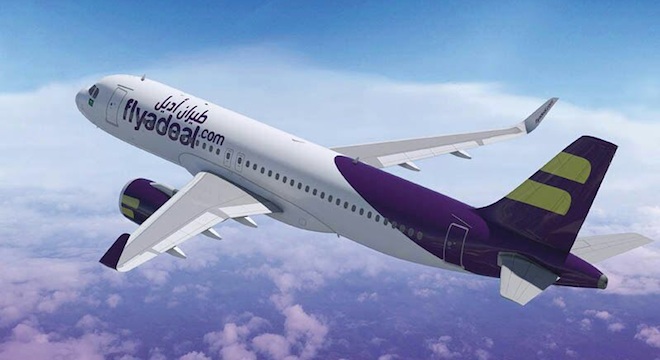
SAUDI ARABIA: Flyadeal Acquires Air Operator Certificate To Operate Domestic And International Flights.
Flyadeal, the newly established low fare airline in Saudi Arabia, is set to commence operations next week, on September 23, marking Saudi National Day.
The General Authority of Civil Aviation (GACA) on Wednesday issued the new carrier its Air Operator Certificate (AOC) at a ceremony held at GACA headquarters in Riyadh.
The ceremony was attended by Eng. Saleh Bin Nasser Al-Jasser, chairman of flyadeal and director general of Saudi Arabian Airlines (Saudia) Corporation, and chairman of the Board of Directors of Saudia Dr. Ghassan bin Abdulrahman Al-Shebl.
By obtaining the Air Operator Certificate, Flyadeal Airlines is now qualified to operate regular domestic and international flights to and from Saudi Arabia's airports.
Flyadeal is a Saudi low-cost airline based at King Abdulaziz International Airport in Jeddah. It is owned by Saudi flag carrier Saudia.
The airline expects to launch operations in the Saudi Arabia's national day which is 23rd September, 2017 with flights to domestic destinations.
Saudia, the flag carrier of Saudi Arabia, announced the creation of Flyadeal on 17 April 2016.
The venture is part of Saudia Group's SV2020 Transformation Strategy, which aims to elevate the group's units into world-class organisations by 2020.
Flyadeal will cater to domestic travellers, Hajj and Umrah pilgrims, and the rising number of tourists to Saudi Arabia, among other groups.
Flyadeal will initially operate flights to major domestic destinations, including Riyadh and Dammam, before expanding to regional markets.
As of September 2017 Flyadeal fleet consist of 2 Airbus A320-200 with a capacity of 180 ecomomy passengers.
Flyadeal has ordered for 6 other aircrafts.
Tourism Observer
Tuesday, 12 September 2017
RUSSIA: Government To Restrict Purchase Of Foreign-Built Airliners To Boost Russian Aerospace Industry
Russian government has proposed a draft legislation, which may set a restriction to purchase of foreign-built aircraft by Russian airlines. The bill has been passed to the State Duma for review. It is expected to foster development of Russian aerospace industry, the government explains.
The current regulation implies that all purchases within the frameworks of investment projects valued 10 billion rubles ($175 million) and up should be coordinated with the government.
This requirement applies to companies, which are owned by the state by more than 50% and their subsidiaries as well as private companies, which obtained state guarantees of financing in the amount of 10% of their project cost.
The proposed amendments virtually allow the government to force airlines to coordinate their purchases or leasing deals involving foreign-built aircraft with a commission for import substitution.
The specific criteria will be determined by a separate document, but it is assumed that such coordination will be required for purchase or leasing of aircraft priced above 1 billion rubles (or $17.5 million).
The official catalogue price of Airbus A320 and Boeing 737-800, the most popular foreign types with Russian airlines, is $99 million and $98 million respectively, which translates to around 5.6 billion dollars at current rate.
Catalogue prices for widebody aircraft exceed 10 billion rubles.
The price of A350-900, which is scheduled for delivery to Russia’s state-run Aeroflot Airlines in 2019, is 17.8 billion rubles ($311 million), although the manufacturer may offer discounts depending on the terms of their contracts.
Commenting on the bill, Russian vice-president Dmitry Rogozin said the new regulation might become effective as early as January 1, 2018, Interfax newswire reports.
The present initiative is not the first one in the recent times, aimed at supporting Russian aerospace industry.
In late August the country’s Transport Ministry announced it was elaborating amendments to current regulations obliging all airlines to have at least three Russian-made aircraft no older than five years in their fleets in order to obtain an Air Operator Certificate.
Earlier, Ministry of Industry and Trade proposed to cancel beneficial customs duties applied to imported aircraft with seating capacity from 50 to 300 passengers and with MTOW between 20 and 90 tons.
Tourism Observer
Monday, 11 September 2017
KENYA: Kenya Airways Acquires Foreign Air Carrier Permit To Operate Direct Flights To America
Two more regulatory hurdles stand in the path of a maiden direct flight from Kenya to the US, Kenya’s Transport Secretary James Macharia has said and expressed confidence in clearing them.
The US Department of Transportation (DOT) on September 5 granted national carrier, Kenya Airways a permit to operate passenger, mail and cargo flights directly to the US.
In February, the US gave the first approval for direct flights after the Jomo Kenyatta International Airport (JKIA) was granted Category One status by the Federal Aviation Authority (FAA).
Mr Macharia said on Friday there were two pending approvals by the US Transportation Security Administration (TSA) and FAA before direct flights to the US would commence.
There are two more steps which are not as onerous as the first two, Mr Macharia said.The pending approval by the TSA is anchored on an ongoing audit of JKIA to certify it as secure as a “last point of departure” for flights heading to the US. This inspection is expected to come to an end next month.
The FAA will also need to grant KQ an Air Operator Certificate after inspecting the carrier’s equipment and facilities. It is expected that the FAA will grant this certificate in January, Mr Macharia said.
This approval by the DOT has been achieved thanks to the hard work of great individuals within all the departments of KQ. I am confident that our team will complete the next milestones with the same success and allow us to operate non-stop flights to the US in 2018, said Kenya Airways Commercial Director Vincent Coste..
In earlier interviews, Kenya Airways had said that it plans to launch its first flight to the US during the peak travel season in June 2018.
Kenya has been chasing direct flights to the US for more than a decade. Direct flights would cut to nine hours a journey that can currently take as much as 19 hours as passengers and cargo are routed through Europe, the Middle East or South Africa.
Mr Macharia said direct flights would make it easier for Kenya to export fresh produce to the US. It would also make Kenya an aviation hub and boost tourism numbers, he added.
The DOT granted the Kenya Airways the foreign carrier permit after the expiry of two consultation windows during which the public, then the President of the United States were supposed to register any disapproval. There were no objections.
According to the terms of the order served on KQ and the Kenyan government, the foreign air carrier permit will only expire if the airline goes into liquidation; bilateral agreements between the two countries change; or if the government in Nairobi asks for another carrier to be granted the licence in place of the Kenya Airways.
The United States government has granted Kenya Airways a permit to operate direct flights to America.
According to an order issued by the Department of Transportation, the permit became effective on September 5.
The Department of Transportation had in June recommended that KQ, as the airline is commonly known, be granted the permit if there were no public objections.
The President of the United States was also given a 61-day window to disapprove the permit, if he so wished. No objection had been given by the time the window expired on September 05.
The Department of Transportation now says that it has given KQ a foreign air carrier permit to engage in: Scheduled and charter foreign air transportation of persons, property, and mail from any point or points behind Kenya, via any point or points in Kenya and any intermediate points, to any point or points in the United States and beyond.
Kenya was in February granted Category One status as officials from America’s Federal Aviation Administration gave approval for non-stop direct flights between the two countries.
This set the stage for Kenya Airways and the Jomo Kenyatta International Airport to begin going through the final regulatory hurdles before the take-off of the first flight from Nairobi to the United States.
In June, Transport Cabinet Secretary James Macharia said that officials from the United States would come to Kenya in October to carry out the final audit of the Jomo Kenyatta International Airport.
Tourism Observer
Monday, 23 May 2016
SA Civil Aviation Authority Lifts SA Express’ Suspension
The South African Civil Aviation Authority (SACAA) has lifted the suspension of SA Express’ Air Operator Certificate (AOC). This means that the airline may, with immediate effect, resume operating their fleet of 26 aircraft.
The lifting of the suspension comes a day after the operator’s AOC privileges were temporarily withdrawn by the SACAA, after recent inspections and audits revealed deficiencies relating to the operator’s safety monitoring systems.
Following several and intensive engagements between the airline and the Regulator; SA Express provided the SACAA with a revised corrective action plan, which upon perusal and consideration was found to address the major concerns that were raised by the Regulator.
Whilst the suspension has been lifted, the SACAA will still continue to monitor and oversee the full implementation of SA Express’ corrective action plan. The SACAA will also intensify its oversight of the airline’s entire operation.
Oversight inspections and audits by regulators are done on a sample basis, and as such operators need to make sure that they have adequate safety management systems in place that can enhance and promote the levels of safety.
The SACAA wishes to reiterate that aviation safety and security is critical, and operators need to always ensure that their operations are safe and secure. Commercial gains should never supersede the safety of the crew, passengers, and the general public.
The SACAA, in line with its mandate, will continue to effectively regulate and oversee civil aviation activities in the country. South Africans can be assured that their country’s aviation safety and security standards meet, and in some instances, exceed the minimum global requirements, and thus compares favourably in terms of alignment with the best international standards and practices.
It is important to note that suspensions and withdrawals of license holders’ privileges are never an instant action or any form of reprisal by the regulator. Such a decision is usually preceded by comprehensive engagements and attempts by the regulator to highlight deficiencies and help license holders to comply with the prescribed standards and applicable regulations.
Suspensions are therefore precautionary measures aimed at avoiding catastrophic incidences. Moreover, aviation and the airline industry specifically is a 24-hours operation, and therefore there is never such a thing as an appropriate time to suspend operations.
The SACAA will continue to work with all license holders to ensure that safety practices continue to be engraved in the DNA of each entity and operation; because it is a fact that aircraft accidents, as a result of negligence or otherwise, can have a devastating effect not only on the business of operators or country, but also to the families of those that use air transport services.
Friday, 13 May 2016
SA Civil Aviation Authority Suspends SA Express’ Air Operator Certificate
Following failure to comply with the applicable civil aviation regulations, the South African Civil Aviation Authority (SACAA) has suspended SA Express’ air operator certificate (AOC). The suspension is effective as of today, Saturday, 30 April 2016.
It is critical to note that this suspension is precautionary and taken in the interest of safety and preventing incidents that can be catastrophic.
The suspension, which is in terms of Part 185 of the Civil Aviation Regulations, pertains to the operator’s AOC – N399D, S370D, I/N002, and I/S001.
The suspension follows a series of non-compliances and the SACAA’s dissatisfaction with the operator’s safety monitoring systems, which are meant to monitor and address any safety deficiencies. The Regulator also found the operator’s proposed corrective action plan inadequate as it does not satisfactorily address the findings raised.
The SACAA wishes to point out that recent inspections and audits on the airline’s operations have pointed to inefficient safety monitoring systems, and some level of failure by the operator to satisfactorily address concerns raised by the Regulator.
The SACAA views the inefficiency of the safety monitoring systems in a serious light as it poses serious safety hazards and risks to the crew, passengers, and the public at large. For this reason, the Regulator cannot allow the operator to continue with operations until such time that the identified safety concerns are adequately addressed.
As much as the SACAA has a duty to help operators comply with applicable regulations, the primary responsibility is on operators to ensure that their operations are safe and secure at all times. Failure to do so is a contravention of the applicable civil aviation regulations.
Moreover, aviation safety and security are of paramount importance in this industry; and passengers require some form of assurance that once they board an aircraft they will automatically land safely and hassle-free at their intended destination.
The SACAA wishes to emphasise that it is receiving full cooperation from SA Express and will provide any assistance possible, and within the Regulator’s mandate, in order to ensure that the matter is resolved as soon as possible.
As much as the SACAA is fully aware of the effect and disruptions the suspension has on passengers; it is equally important to note that the decision was not taken lightly and is, in fact, in the interest of ensuring that the operator’s safety systems are beyond reproach and can offer an acceptable level of safety for passengers and crew.
The SACAA will always remain committed to meeting its obligations and keeping South Africans and those that use the country’s airspace safe. The Regulator is also dedicated to upholding the country’s impeccable zero percent accident fatality rate in terms of scheduled operations.
Unsafe operations have the potential to undermine the growth and development of the aviation industry, as well as the country’s highly regarded civil aviation safety and security standards. Aviation safety and security must always be prioritised ahead of commercial gains.
In terms of Part 185 of the civil aviation regulations, the operator has the right to appeal the decision with the Director of Civil Aviation within 30 days from the date of receipt of the suspension notice.
Tuesday, 3 May 2016
SOUTH AFRICA: SA Express Suspension Lifted
The South African Civil Aviation Authority (SACAA) has lifted the suspension of SA Express’ Air Operator Certificate (AOC).
This means that the airline may, with immediate effect, resume operating their fleet of 26 aircraft. The lifting of the suspension comes a day after the operator’s AOC privileges were temporarily withdrawn by the SACAA, after recent inspections and audits revealed deficiencies relating to the operator’s safety monitoring systems.
The Regulator said following several and intensive engagements with the airline, it had provided the SACAA with a revised corrective action plan, which upon perusal and consideration was found to address the major concerns that were raised by the Regulator".
The SACAA said it will continue to intensively monitor and oversee the full implementation of SA Express’ corrective action plan.
It added that suspensions and withdrawals of license holders’ privileges are never an instant action or any form of reprisal by the regulator.
"Such a decision is usually preceded by comprehensive engagements and attempts by the regulator to highlight deficiencies and help license holders to comply with the prescribed standards and applicable regulations. Suspensions are therefore precautionary measures aimed at avoiding catastrophic incidences. Moreover, aviation and the airline industry specifically is a 24-hours operation, and therefore there is never such a thing as an appropriate time to suspend operations."
The suspension came after the airline had failed to submit satisfactory corrective measures, after two failed audits on 19 and 20 April. As a result the airline's operations were suspended in the middle of the long-weekend, leaving hundreds of passengers stranded and scrambling to make alternative arrangements.
Subscribe to:
Posts (Atom)