Showing posts with label roseau. Show all posts

Thursday, 14 January 2016

DOMINICA: Roseau Capital City Of Dominica

Roseau is the capital and largest city of Dominica, with a population of 16,582. It is a small and compact urban settlement, located within the Saint George parish and surrounded by the Caribbean Sea, the Roseau River and Morne Bruce. Built on the site of the ancient Kalinago Indian village of Sairi, it is the oldest and most important urban settlement on the island of Dominica.

It is located on the west leeward coast of Dominica, and is a combination of modern and colonial (French Style) architecture.

Roseau is Dominica's most important port for foreign trade. Some exports include bananas, bay oil, vegetables, grapefruit, oranges, and cocoa. The service sector is also a large part of the local economy.

There is a prominent diocese called Roman Catholic Diocese of Roseau.

The city of Roseau sits on an alluvial fan formed hundreds of years ago as the river after which it was named meandered across the area from what is now known as Newtown to its current location. Over the last two thousand years, Amerindians migrating through the islands settled the area attracted by the nearby river.

With the arrival of the Europeans on the island in the 16th and 17th centuries, a small settlement was established by the French who in their tradition of naming places after what they found there named the settlement with their name for the river reeds which grew along the river banks. A plan was created for the settlement which mirrored examples in France where streets extended from a central point at what is today the Old Market and extended out to the rest of the settlement.

Conflict raged between the French and the British over the area on several occasions. Finally, the British gained a stronghold and by the late 18th and early 19th centuries set out plans for the city which included fortifications and government structures, the grid road street system and blocks and new urban areas to the north and south known today as Potter's Ville and Newtown.

Goodwill was established in the 1950s and Bath Estate in the early 1980s. Since then several new semi-urban settlements — such as Stock Farm, Castle Comfort, and Wall House — have been constructed around the existing ones. Some older settlements like Fond Cole and Canefield nowadays belong also to the semi-urban area that lies around Roseau.

The French influence can still be seen today, however, in its architecture, and crooked streets which extend from the Old Market Plaza. Examples of the English influence is also evident in architecture and street names.

Roseau's nearby scenery (mostly in its so-called valley) includes Boiling Lake, 10.5 km (6.5 mi) east, in the Morne Trois Pitons National Park, waterfalls, thermal springs, and scenic plateaus.

Morne Bruce provides panoramic views of most of downtown Roseau and northwards toward Woodbridge Bay deepwater port and Fond Cole. From Morne Bruce there are also views of the Botanic Gardens at its base as well as the Caribbean Sea which look quite spectacular on cruise ship days when several cruise liners are in port.

Roseau's climate is a tropical rainforest climate, featuring relatively constant temperatures throughout the course of the year with average high temperatures generally between 28 and 31 °C (82 and 88 °F) and average low temperatures between 19 and 23 °C (66 and 73 °F).

Rainfall is common throughout the course of the year, with the city seeing on average nearly 2,000 mm (79 in) of rain per year. Roseau features a noticeably drier stretch from February through April, though each of these months on average still sees at least 100 mm (4 in) of precipitation.

The central district of Roseau is tightly packed with small and large houses and even larger modern concrete structures. There is little green or open space situated within the city, and this is even more so today, as many of the courtyards which was once commonplace within the city are giving way to office space.

The district is, however, framed in every direction by natural elements. The sea and the river provide water element while the Botanical Gardens and the Government House gardens frame the city with green space. Both these elements are rare in the Caribbean. No other centre in the region has such extensive botanical gardens with such central location, and the Roseau River is amongst the largest rivers that flow through any Caribbean capital.

The urban structure of Central Roseau is based on an irregular grid system of miniature proportions, making it a highly illegible city. Even though the grid area is not very extensive, it is relatively easy for a visitor to get lost there.

The grid area has some 80 blocks in the area of 30 hectares (74 acres). In comparison, the grid areas of Kingstown and Castries — capitals of Saint Vincent and Saint Lucia — have some 50 and 60 blocks in the areas of over 40 ha (99 acre). The average block size in Central Roseau is thus some ⅓ hectare (1 acre), i.e. about half of the figure of Central Kingstown.

There are some fine examples of West Indian architecture in Roseau. The ones that stand out the most are the French Colonial style and the vernacular form.

Much of the French influence can be found along King George V Street. Around the city you will come across some good examples of the English influence in the form of large colonial town houses and colonial public/government buildings.

The churches in Roseau are fine examples of Europe in Dominica with a bit of creolization. The Roman Catholic Cathedral stands prominent in Gothic Romanesque revival and the Anglican Church on Victoria Street in Georgian style. Amongst these buildings you will find much of the urban vernacular squeezed in between larger colonial and more modern buildings.

Because of the suburban sprawl, few people live in Central Roseau, but more of them commute daily. Motorized vehicles pour into the central district thus introducing a mode of point-to-point interaction in an environment that was created for multiple use. As elders said, first there were no streets but just a space between the buildings.

The streets of Roseau, and especially those of its central district, are not only ways to move from place to place but they are places themselves. They are used as gardens, playing fields, and social meeting places.

The Botanical Gardens on the fringes of the central district are mostly used by children.

Within the city of Roseau, there are many opportunities for recreation. Many persons seek out the tranquility and cool of the Botanical Gardens as a getaway on Sunday afternoons and at lunch. As well, it is a popular venue for local cricket matches and sports training. Football is a popular sport; there are several pitches throughout the city area (at Newtown, Potters Ville, and Bath Estate), as well as in the sports stadium at Windsor Park.

There are dedicated sports facilities around the city. Private tennis courts are located on High Street; netball and basketball courts also abound in the city's major high schools. These are complemented by community facilities at Goodwill. A dedicated netball and basketball stadium is located at Stockfarm near the Dominica State College.

In 2007, Windsor Park, also home to the Dominica national football team, was completed with a donation of EC$33 million from the government of the People's Republic of China.

Elsewhere in the city it is not uncommon to find that a section of the street, sidewalk or even the beach has been adapted to makeshift games of cricket or football.

Popular sports include netball, basketball, rounders and (to a much lesser extent) tennis.

There are no world famous hotel chains in the city. The most famous hotel is the Fort Young Hotel. In addition there are several small family owned establishments within and on the outskirts of the city.

Dominica Broadcasting Corporation, the national radio station, and two other private radio stations are located in the capital.

Roseau is home to service clubs including, Kiwanis, Rotary and Lions. There are other organizations such as the local humane society and conservation society. ChildFund International USA has an office in Roseau from where it runs its child centered development programs for Dominica and Saint Vincent.

The Dominica Association of Industry and Commerce, Waitukubuli Ecological Foundation, Dominica Tourism Association and others are based in the city.

The city is also home to several labour organizations including the Dominica Amalgamated Workers' Union, the Dominica Public Service Union, the Dominica Trade Union, the National Workers' Union and the Waterfront and Allied Workers' Union

As the most important town on the island and hub of all business activity, the city is a central point of the road networks on the island. It is an important link between northern, eastern, and southern bound traffic.

The city is served by Canefield Airport, a nearby small aircraft airport which provides direct links to nearby islands, as well as the larger Douglas–Charles Airport to the north. The ferry terminal provides direct links to the neighbouring Guadeloupe to the north and Martinique and St. Lucia to the south.

There are no rail or subway systems.

Roseau has been the historical centre of education on the island. There are six secondary schools located in the city as well as eight primary schools. A community college, The Dominica State College, is located in Roseau. A private medical school, All Saints School of Medicine, also calls Roseau home.

Several embassies are located in the city. They include the Brazilian Embassy, the Chinese, the Cuban embassy, and the Venezuelan Embassy, with a couple of other consulates located around the city.

Sunday, 6 September 2015

DOMINICA: Nature Isle of the Caribbean

The name Dominica comes from the Latin word for Sunday, which was the day on which the island was spotted by explorer Christopher Columbus. Its pre-Columbian name by the Caribs was Wai‘tu kubuli, which means "Tall is her body".The indigenous people of the island were the Island Caribs or Kalinago.


Officially the Commonwealth of Dominica, is an island country in the Lesser Antilles region of the Caribbean Sea, south-southeast of Guadeloupe and northwest of Martinique. Its size is 750 square kilometres (290 sq mi) and the highest point in the country is Morne Diablotins, which has an elevation of 1,447 metres (4,747 ft). The Commonwealth of Dominica had a population of 72,301 at the 2014 Census. The capital is Roseau, located on the leeward side of the island.

Dominica was first discovered by the Spanish, then colonized predominately by the French. Great Britain took it over in 1763 after the Seven Years War and gradually established English as the official language. The island republic gained independence in 1978 and its name is pronounced with emphasis on the third syllable, related to its former Dominique. Dominica has been nicknamed the "Nature Isle of the Caribbean" for its unspoiled natural beauty.It is the youngest island in the Lesser Antilles, still being formed by geothermal-volcanic activity, as evidenced by the world's second-largest hot spring, Boiling Lake. The island features lush mountainous rainforests, and is the home of many rare plants, animals, and bird species. There are xeric areas in some of the western coastal regions, but heavy rainfall occurs inland. The island has 365 rivers. The Sisserou parrot (also known as the imperial amazon), is found only on Dominica and is the island's national bird. It is featured on the national flag. Dominica's economy is depends on tourism and agriculture.

Christopher Columbus named the island after the day of the week on which he spotted it: Sunday (dies Dominica in Latin), 3 November 1493. In the hundred years following, Dominica remained isolated. It was inhabited by the Kalinago people (Island Caribs). As European explorers and settlers entered the region, more indigenous refugees settled there after being driven from surrounding islands. They pushed out the Spanish settlers, who found other areas easier to control and with more resources.

The island became multi-ethnic due to European colonization, which included the importation of numerous African slaves.

Although English is now the official language, an Antillean Creole, based on the French language, West African and Carib influences, is still spoken by many residents, especially people of older generations.

Dominica is an island nation in the Caribbean Sea, the northernmost of the Windward Islands (though it is sometimes considered the southernmost of the Leeward Islands). The size of the country is about 289.5 square miles (750 km2). The capital is Roseau.

The Commonwealth of Dominica is engaged in a long-running dispute with Venezuela over Venezuela's territorial claims to the sea surrounding Isla Aves (literally Bird Island, but in fact called Bird Rock by Dominica authorities), a tiny islet located 140 miles (225 km) west of the island of Dominica.

There are two primary population centres: Roseau (with 14,725 inhabitants in 2011) and Portsmouth (with 4,167 inhabitants in 2011).

TOURISM ATTRACTIONS

Dominica is largely covered by rainforest and is home to the world's second-largest hot spring, Boiling Lake.Dominica has many waterfalls, springs, and rivers. The Calibishie area in the country's northeast has sandy beaches.Some plants and animals thought to be extinct on surrounding islands can still be found in Dominica's forests.The volcanic nature of the island has attracted scuba divers. The island has several protected areas, including Cabrits National Park, as well as 365 rivers.

Morne Trois Pitons National Park is a tropical forest blended with scenic volcanic features. It was recognised as a World Heritage Site on 4 April 1995, a distinction it shares with four other Caribbean islands.

Dominica, known as "The Nature Island of the Caribbean" due to its spectacular, lush, and varied flora and fauna, which are protected by an extensive natural park system; the most mountainous of the Lesser Antilles, its volcanic peaks are cones of lava craters and include Boiling Lake, the second-largest, thermally active lake in the world possesses the most pristine wilderness in the Caribbean.Originally, it was protected by sheer mountains which led the European powers to build ports and agricultural settlements on other islands. More recently, the citizens of this island have sought to preserve its spectacular natural beauty by discouraging the type of high-impact tourism which has damaged nature in most of the Caribbean.

Dominica is mostly volcanic and has few beaches; therefore, tourism has developed more slowly than on neighboring islands. Nevertheless, Dominica's mountains, rainforests, freshwater lakes, hot springs, waterfalls, and diving spots make it an attractive eco-tourism destination. Cruise ship stopovers have increased following the development of modern docking and waterfront facilities in Roseau, the capital.Out of 22 Caribbean islands tracked, Dominica had the fewest visitors in 2008 (55,800 or 0.3% of the total). This was about half as many as visited Haiti.

Visitors can find large tropical forests, including one which is on the UNESCO list of World Heritage sites, hundreds of streams, coastlines and coral reefs.

The Sisserou parrot (Amazona imperialis) is Dominica's national bird and is endemic to its mountain forests. A related species, the Jaco or red-necked parrot (A. arausiaca),. is also a Dominican endemic. Both birds are rare and protected, though some forest is still threatened by logging in addition to the long-standing threat of hurricanes.

The Caribbean Sea offshore of the island of Dominica is home to many cetaceans. Most notably a group of sperm whales live in this area year round. Other cetaceans commonly seen in the area include spinner dolphins, pantropical spotted dolphins and bottlenose dolphins. Less commonly seen animals include killer whales, false killer whales, pygmy sperm whales, dwarf sperm whales, Risso's dolphins, common dolphins, Atlantic spotted dolphins, humpback whales and Bryde's whales. This makes Dominica a destination for tourists interested in whale-watching.

Dominica is especially vulnerable to hurricanes as the island is located in what is referred to as the hurricane region. In 1979, Dominica was hit directly by category 5 Hurricane David, causing widespread and extreme damage. On 17 August 2007, Hurricane Dean, a category 1 at the time, hit the island. A mother and her seven-year-old son died when a landslide caused by the heavy rains crushed their house.In another incident two people were injured when a tree fell on their house.Prime Minister Roosevelt Skerrit estimated that 100 to 125 homes were damaged, and that the agricultural sector was extensively damaged, in particular the banana crop. In August 2015, Tropical Storm Erika caused extensive flooding across the island.

GOVERMENT

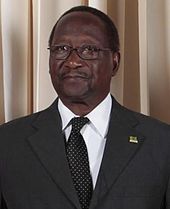
Nicholas Liverpool, Dominica's sixth president

Dominica is a parliamentary democracy within the Commonwealth of Nations and, since 1979, a member of La Francophonie. The Commonwealth of Dominica is one of the Caribbean's few republics. The president is the head of state, while executive power rests with the cabinet, headed by the prime minister. The unicameral parliament consists of the 30-member House of Assembly, which consists of 21 directly elected members and nine senators, who may either be appointed by the president or elected by the other members of the House of Assembly.

Unlike other former British colonies in the region, Dominica was never a Commonwealth realm, instead becoming a republic on independence. Dominica is a full and participating member of the Caribbean Community (CARICOM) and the Organisation of Eastern Caribbean States (OECS).

Dominica is also a member of the International Criminal Court with a Bilateral Immunity Agreement of protection for the US military, as covered under Article 98. In January 2008 Dominica joined the Bolivarian Alternative for the Americas.

Dominica is divided into 10 parishes, given below with their 2011 Census populations:
Saint Andrew Parish (9,471)
Saint David Parish (6,043)
Saint George Parish (21,241)
Saint John Parish (6,561)
Saint Joseph Parish (5,637)
Saint Luke Parish (1,668)
Saint Mark Parish (1,834)
Saint Patrick Parish (7,622)
Saint Paul Parish (9,786)
Saint Peter Parish (1,430)

Bananas and other agriculture dominate Dominica's economy, and nearly one-third of the labour force works in agriculture. This sector, however, is highly vulnerable to weather conditions and to external events affecting commodity prices. In 2007, Hurricane Dean caused significant damage to the agricultural sector as well as the country's infrastructure, especially roads. In response to reduced European Union (EU) banana trade preferences, the government has diversified the agricultural sector by promoting the production of coffee, patchouli, aloe vera, cut flowers, and exotic fruits such as mango, guava, and papaya. Dominica has also had some success in increasing its manufactured exports, primarily soap.

CURRENCY
Dominica's currency is the East Caribbean Dollar.

TRANSPORT

AIR
There are two small airports on the island. The primary airport, Melville Hall Airport (DOM), is on the northeast coast and is about a 45-minute drive from Portsmouth. The second is Canefield Airport (DCF), about 15 minutes from Roseau on the southwest coast. Melville Hall Airport is suitable for limited use of commercial jets because of runway length. Melville Hall currently has regular service by BVI Airways, Winair, Seaborne Airlines and LIAT using twin turboprop aircraft like the ATR & Saab 340, as well as Conviasa and Amerijet, which, using Boeing 727 Freighters, is the only airline with jet service to the republic. A runway extension and service upgrade project began at Melville Hall around 2006 and was finished in 2010. In March 2013, airline American Eagle halted flights to the island citing high labor costs.

ROAD
The only major highway on the island is the road between Portsmouth and Roseau. It takes about 45 minutes to drive from Portsmouth to Roseau. Private minibuses form the major public transport system. However, this "highway" was under major reconstruction via help from the Chinese and was completed in April 2012.

MORE
The vast majority of Dominicans are of African descent. There is a growing mixed population, along with a significant Indo-Caribbean or East Indian groups, a small European origin minority (descendants of French, British, and Irish colonists) and there are small numbers of Lebanese, Syrians and Asians. Dominica is also the only Eastern Caribbean island that still has a population of pre-Columbian native Caribs, who were exterminated or driven from neighbouring islands. As of 2014 there are more than 3,000 Caribs remaining. They live in eight villages on the east coast of Dominica. This special Carib Territory was granted by the British Crown in 1903.There are also about 1,000 medical students from the United States and Canada who study at the Ross University School of Medicine in Portsmouth.

LANGUAGES
English is the official language of Dominica and is universally spoken and understood. However, because of historic French occupation during different times in history, and the island's location (it lies between the two French-speaking departments of Martinique and Guadeloupe), Antillean Creole, based on French, is spoken by many people on the island. The French creole language is particularly used among the older generation, which also speaks a language known as "patois". Because of a decline in its usage by the younger generation, initiatives have been set up in an effort to increase usage and promote this unique part of the nation's history and culture.

The dialect of Dominica also includes Kokoy, along with Creole—French-based patois. Cocoy, or Kokoy,is a mix of Leeward Island English Creole and Dominican Creole.It is mainly spoken in the north-eastern villages of Marigot and Wesley by immigrants from Montserrat and Antigua. Over time there has been much intermarrying, but there are still traces of difference in origin. As a result of this mixture of languages and heritage, Dominica is a member of both the English-speaking Commonwealth of Nations and the French-speaking La Francophonie.

Island Carib, also known as Igneri (Iñeri, Igñeri, Inyeri), was an Arawakan language historically spoken by the Island Caribs of the Lesser Antilles in the Caribbean. The Island Caribs lived throughout the southern Lesser Antilles such as Dominica, St Vincent and Trinidad, supposedly having conquered them from their previous inhabitants, the Igneri. It went extinct about 1920, but an offshoot survives as Garifuna, primarily in Central America.

RELIGION
About 80% of the population is Roman Catholic, though in recent years a number of Protestant churches have been established. There is also a small Muslim community in Dominica, and the nation's first mosque was built recently near Ross University.

CITIES & TOWNS OF DOMINICA
Rank Name Population.

1 Roseau 16,571
2 Portsmouth 3,633
3 Marigot 2,669
4 Berekua 2,608
5 Mahaut 2,369
6 Saint Joseph 2,184
7 Wesley 1,933
8 Salisbury 1,413
9 Castle Bruce 1,387
10 La Plaine 1,332

CUISINE
Dominica's cuisine is similar to that of other Caribbean islands, particularly Trinidad and St Lucia. Like other Commonwealth Caribbean islands, Dominicans have developed a distinct twist to their cuisine. Breakfast is an important daily meal, typically including saltfish, dried and salted codfish, and "bakes", fried dough. Saltfish and bakes are combined for a fast food snack that can be eaten throughout the day; vendors on Dominica's streets sell these snacks to passersby, together with fried chicken, fish and fruit and yogurt "smoothies". Other breakfast meals include cornmeal porridge, which is made with fine cornmeal or polenta, milk and condensed milk and sugar to sweeten. Traditional British-influenced dishes, such as eggs, bacon and toast, are also popular, as are fried fish and plantains.
Common vegetables include Plantain, Tania (a root vegetable), Yam, Potato, rice and peas. Meat and poultry typically eaten include chicken (which is very popular), beef, and fish. These are often prepared in stews with onions, carrots, garlic, ginger and herbs like thyme. The vegetables and meat are browned to create a rich dark sauce. Popular meals include rice and peas, brown stew chicken, stew beef, fried and stewed fish, and many different types of hearty fish broths and soups. These are filled with dumplings, carrots and ground provisions.

Dominica's cuisine is similar to many other Caribbean islands including that of Trinidad and St Lucia. Though separated by water Dominica like many other Commonwealth Caribbean islands have their distinct twist to their meals. Breakfast is an important meal in Dominica and is eaten everyday, typically eaten meals include saltfish which are dried and salted codfish and Bakes made by making a dough and frying in oil prove popular before a long days at work.

Saltfish and bakes however is also doubled up as a fast food snack that can be eaten throughout the day, vendors and Dominica's streets sell these snacks to passers by alongside Fried chicken, Fish and tasty smoothies. Other breakfast meals include cornmeal porridge which is made with fine cornmeal or polenta, milk and condensed milk and sugar to sweeten, more British influenced meals like Eggs, bacon and toast are also popular alongside fried fish and plantains. During Lunchtime or Dinner Common vegetables eaten are Plantain, Tania, Yam, Potato, rice and peas.

Meat and poultry typically eaten include Chicken (which is very popular), beef, fish which are normally stewed down with onions, carrots, garlic, ginger and herbs like thyme and using the browning method to create a rich dark sauce. Popular meals include rice and peas, Stew chicken, Stew beef, fried and stewed fish and many different types of hearty fish broths and Soups which are packed full with dumplings, carrots and ground provisions.

Roadside stands and small-town restaurants typically serve fried chicken, fish-and-chips and "tasty bakes" which are fried dough made with flour, water and sugar or sometimes salt, along with cold drinks. The island produces numerous exotic fruits, including bananas, coconuts, papayas, guavas, pineapples, and mangoes which can be eaten as dessert and be pureed or liquefied.

Dominica's national dish is the mountain chicken, which are snares of the legs of a frog called the Crapaud, which is endemic to Dominica and Montserrat. Found at higher elevations, it's a protected species and can only be caught between autumn and February.

BEVERAGES
Rivers flowing down from the mountains provide Dominica with an abundant supply of freshwater. Drinks include rum punch and freshly made smoothies.

Dominica tea culture has a long history. Many traditional medicinal teas have origins with the original Carib culture of the island. Dominica brews its own beer under the Kubuli label.