Showing posts with label seaborne airlines. Show all posts

Tuesday, 26 February 2019

DOMINICAN REP: Seaborne Airlines Commences Flights Between San Juan And Dominican Republic

Seaborne Airlines, which is owned and cooperatively operated by Silver Airways, launched flights between Puerto Rico and the Dominican Republic on 15 February, with it launching a three times weekly service between San Juan (SJU) and Santiago de los Caballero (STI).

We are thrilled that Seaborne Airlines has returned to the Dominican market, said Jesus Medina, COO, Seaborne Airlines. Santiago shares important historical, cultural and economic ties with Puerto Rico and we are delighted to be providing safe, reliable and customer-friendly service for travellers in the region.

The carrier will operate the 494-kilometre sector three times weekly using its fleet of Saab 340s, with departures on Mondays, Wednesdays and Fridays.

No other carrier currently operates between the two airports.

Seaborne Airlines is a FAR Part 121 airline headquartered in San Juan, Puerto Rico. It was established in 1992 and operates domestic seaplane and land plane services.

In late 2008, Seaborne Airlines began land based flight service between St. Thomas, St. Croix, and San Juan TJIG Isla Grande Airport under the brand name Seaborne Airshuttle.

In January 2011, Seaborne Airlines began service to San Juan TJSJ Luis Munoz Marin International Airport. On December 18, 2013, Seaborne announced a headquarters change from Christiansted, St. Croix to San Juan, Puerto Rico, completed by March 2014.

Seaborne Airlines is owned and cooperatively operated by Silver Airways.

Seaborne has started codesharing flights with American Airlines, on routes which correspond in both timetables. This includes service from San Juan to all of Seaborne's destinations, excluding St. Croix and St. Thomas.

Miles from Seaborne (SeaMiles) are not currently convertible to AAdvantage miles, and cannot be used for travel on American. All passenger services, including baggage and assistance, are provided by American on codeshared flights.

Seaborne previously started codesharing flights with Air Europa between Las Americas International Airport at Santo Domingo, Dominican Republic and Luis Munoz Marin International Airport at San Juan, Puerto Rico for passengers from their route Adolfo Suárez Madrid–Barajas Airport - Las Americas International Airport. This codeshare has ended.

As of September 30, 2014, Seaborne has an interline agreement with United Airlines.

As of March 30, 2015, Seaborne Airlines expanded American Airlines' codeshare agreement to include St. Thomas and St. Croix, and adding Anguilla Services April 30, 2015. Starting December 15, 2015, Seaborne will be flying to Antigua.

As of October 21, 2015, Seaborne Airlines begins codesharing with Jetblue Airways.

As of July 18, 2016, Seaborne Airlines launches codesharing with Delta Air Lines.

As of March 8, 2017, Seaborne Airlines launches codesharing with Vieques Air Link

On January 8, 2018, Seaborne Airlines announced its restructuring plan under the Chapter 11 Bankruptcy Code following the 2017 Atlantic hurricane season, specifically Hurricane Irma and Hurricane Maria.

The airline announced the acquirement of a $4.2 Million credit facility and has entered a purchase agreement with Silver Airways, which is subject to the Court's approval and potential overbids.

On March 28th, 2018 it was announced that Seaborne was bought by Silver Airways. As of April 24, 2018, Silver Airways completed the acquisition of Seaborne Airlines.

As of February 2019, the Seaborne Airlines fleet includes the following aircraft:

- De Havilland Canada DHC-6 Twin Otter 2

- Saab 340B 8

- Total 10


Tourism Observer

Thursday, 28 June 2018

ST MAARTEN & ST MARTIN: Tourism Recovering With New Flights And Hotels Reopening

The tourism industry in St Maarten/St Martin continues to recover at a rapid pace as airlines add new service and hotels reopen following the passage of Hurricanes Irma and Maria last September.

American Airlines recently announced that it has increased seat capacity on its daily flight from Miami upgrading their Miami International Airport (MIA) – Princess Juliana International Airport (SXM) route to a Boeing 737-800 aircraft, accommodating 160 passengers.

In addition, American Airlines will be adding a daily nonstop flight to St Maarten from its hub at Charlotte Douglas International Airport (CLT) starting November 4, 2018, as well as a second daily nonstop from Miami effective December 19, 2018.

Both new flights are currently bookable and will be operated by Airbus A319 aircraft with a capacity of 128 passengers.

St Maarten’s Princess Juliana Airport (SXM) continues to report great progress in terms of improved connectivity as the year progresses.

As of May 2018, two-thirds of all carriers that provided flights to and from the award-winning airport have resumed regular service.

From the United States, travelers can fly to St Maarten with United Airlines, American Airlines, JetBlue, Delta Air Lines, Spirit Airlines, and Seaborne Airlines.

Service from Toronto is available on WestJet, and Dominican carrier Air Century, and Panama-based Copa Airlines have returned as well.

Due to the collaborative efforts by all stakeholders and the community at large, St Maarten has been able to make a quick turnaround, said St Maarten minister of tourism, Cornelius De Weever. We are grateful to the return of all airlines and the reopening of our properties.

This shows the confidence American Airlines has in the comeback of St Maarten/St Martin, the public and private sector have been working continuously with American Airlines to ensure that the flights return in a balanced way complementing the re-opening of various accommodations, added St Maarten’s interim head of tourism, May-Ling Chun.

As of May 2018, there are just fewer than 2,000 bookable rooms available across the entire island.

122 villas and condos are open for business island-wide, boutique hotels and guest houses are ready to accommodate travelers, and several larger properties have conducted soft openings in order to welcome back guests.

Some 87 percent of all on-island activities are also available for guests to enjoy.


Tourism Observer

Wednesday, 16 December 2015

ANTIGUA: Seaborne Launches Antigua Flights

There’s a new way to get to Antigua.

Regional air carrier Seaborne has officially launched service to its newest destination, Antigua.

The carrier began its San Juan-Antigua service this week on a 34-seat Saab 340 aircraft.

It becomes the fourth airline to begin operating flights into the destination since Antigua opened its state-of-the-art terminal at VC Bird International Airport.

“The entrance of Seaborne, provides passengers with one additional option for travelling to Antigua and Barbuda, quicker and more conveniently,” said Antigua and Barbuda Tourism Minister Asot Michael. “As a regional hub, the more modern V.C. Bird International Airport, was extremely appealing and advantageous to Seaborne as they seek to expand their services throughout the wider Caribbean.”

In a statement, Seaborne CEO Gary Foss said the company was “excited to introduce Antigua as the 17th airport served by Seaborne Airlines; the fastest growing airline in the Caribbean.”

Thursday, 12 November 2015

Seaborne Airlines Sponsors Annual Queen Louise Home Golf Classic And Gala

Seaborne Airlines is the title sponsor for the 32nd Annual Queen Louise Home Golf Classic and Gala on Nov. 14 and 15.
The annual “Joined at the Heart” event is the largest fundraiser for Queen Louise Home for Children that helps secure funding to keep the home in operation. During the event’s live auction, travel packages usually garner the highest bids, making airline tickets essential for the fundraiser’s success.

Junia John Straker, CEO of Lutheran Social Services of the Virgin Islands, appreciates Seaborne Airlines’ sponsorship of the fundraiser for a second year in a row, saying, “We are honored that Seaborne has chosen to partner with us again this year. It is so exciting to be a part of Seaborne’s community outreach as they continue to grow throughout the Caribbean.”

Seaborne Airlines has expanded its Caribbean presence over the past year and is the only American Airlines and Jet Blue codeshare affiliate in the Caribbean. “Seaborne takes pride in our community involvement in the U.S. Virgin Islands and are delighted to partner in such great event for the children at Queen Louise Home,” said Hector Montanez, Seaborne Airlines director of business development and marketing.

This year’s Golf Classic will be a two-day tournament at the Carambola Golf Course. The “Night with the Stars” Gala will be held at the Innovative Business Center on Saturday, Nov. 14. Gala tickets may be purchased online at www.lssvi.org. All proceeds from both events benefit the Queen Louise Home for Children.

Major League Baseball players frequently come to support the fundraiser, and former players of now World Series champions, the Kansas City Royals, will be special guests this year.

Dave Nelson, former player with the Texas Rangers, Cleveland Indians, Washington Senators and Kansas City Royals, is the current broadcaster for the Milwaukee Brewers. Also attending will be Greg Pryor, former player with the Washington Senators and Texas Rangers, who played for the Kansas City Royals the last time they won the World Series in 1985.

This year, Sammy Solis, current pitcher with the Washington Nationals, will also be attending. He will be joining his father, Bob Solis, former director of public relations and development at Lutheran Social Services of the Virgin Islands.

Seaborne Airlines and Erie Aviation Reach Agreement for Aircraft Upgrades

Seaborne Airlines has reached agreement with Erie Aviation Incorporated for Aircraft Upgrades to its SAAB 340B cabins. The new cabin will feature Erie Aviations Textile Group / Green Sky Textiles customized new bulkhead covering, new sidewall and new carpeting for the fleet as well as LED cabin lighting with Mood light option. It introduces some of the latest technology and innovations available in cabin interiors. "Seaborne, as the fastest growing airlines in the Caribbean, has based our business model on exemplary customer service," said JJ Cruz, Vice President of Maintenance & Engineering for Seaborne. "This fleet upgrade is just the latest example of how Seaborne continues to invest in our customers."

Seaborne Airlines has been operating in the Caribbean for over 23 years, carrying approximately 2.5 million customers safely. With over 1,500 monthly departures to 17 airports, Seaborne serves San Juan's Luis Munoz Marin International Airport, St. Thomas airport and Seaplane base, St. Croix airport and Seaplane Base, Anguilla, Antigua, Tortola, Dominica, Martinique, Guadeloupe, Saint Martin, St. Kitts, Nevis, La Romana, Punta Cana and Santo Domingo. All Flights operate with two pilots and two engines under Federal Air Regulations Part 121, the strictest code of the US Federal Air Regulation governing air travel.

For additional information about the Company please visit seaborneairlines.com

Erie Aviation, including its affiliate Green Sky Textiles, is a Part 21 manufacturer, distributor, and FAR 145 repair station for commercial airline cabin equipment, including but not limited to aircraft lighting and textiles.

For additional information about the Company please visit www.erieaviation.com and www.greenskytextiles.com

PUERTO RICO: Seaborne And JetBlue Become Codeshare Partners Across The Caribbean

Seaborne Airlines and JetBlue Airways, the largest carrier in San Juan, have finalized terms to begin a codeshare marketing relationship, expanding upon the carriers’ successful interline agreement in place since 2013. The codeshare will help facilitate improved connectivity between two of the top airlines in the Caribbean, subject to receipt of all regulatory approvals.

“We are excited to expand our partnership with JetBlue. Providing improved connectivity in our common hub of San Juan will add tremendous value to Caribbean residents, visitors, and businesses,” said President and CEO of Seaborne Airlines Gary Foss. “We are honored that JetBlue, known for outstanding customer service, would recognize the same that Seaborne employees are providing throughout the Caribbean”, Foss said.

Seaborne, the largest regional operator, and JetBlue, the number one carrier by flights and seats at San Juan Luis Munoz Marin International Airport, offer a combined 50 daily flights that connect 22 destinations. Seaborne will expand the JetBlue network to multiple new destinations, including Anguilla, Dominica, Guadalupe, Martinique, Nevis, St. Kitts, and Tortola. In addition, the Seaborne Airlines network will also provide JetBlue customers’ access to an expanded presence throughout the United States Virgin Islands and the Dominican Republic.

“Our codeshare agreement with Seaborne makes traveling to the Caribbean easier than ever, and that’s the way a beach vacation or family visit should feel,” said Scott Laurence, senior vice president airline planning, JetBlue. “Between JetBlue’s leading position as San Juan’s largest and most customer friendly airline, and Seaborne’s extended local reach, this is a win-win partnership for customers and tourism.”
“The Puerto Rico Tourism Company welcomes this new partnership that supports and strengthens our efforts to increase air access to the Island. This new codeshare marketing relationship between Jet Blue and Seaborne facilitates the entrance of more visitors and positively impacts the economic development in the Island”, said Ingrid I. Rivera Rocafort, executive director of the Puerto Rico Tourism Company.

Along with JetBlue, Seaborne operates as a codeshare partner of American Airlines and Air Europa of Spain. Seaborne offers interline connecting agreements with Delta Airlines and United Airlines as well. In aggregate, Seaborne and the carrier’s partners offer non-stop service to 32 destinations in the Americas and Europe from San Juan. Seaborne’s expanding network out of San Juan has helped solidify San Juan’s position as the Caribbean’s largest hub.

About Seaborne Airlines

Seaborne Airlines has been operating in the Caribbean for over 23 years, carrying more than 2.5 million customers safely. With over 1,500 monthly departures to 16 airports, Seaborne serves San Juan’s Luis Munoz Marin International Airport, St. Thomas airport and Seaplane base, St. Croix airport and Seaplane base, Anguilla, Tortola, Dominica, Martinique, Guadeloupe, Saint Martin, St. Kitts, Nevis, La Romana, Punta Cana, and Santo Domingo. All flights operate with two pilots and two engines under Federal Air Regulation Part 121, the strictest code of the US Federal Air Regulation governing air travel.

About JetBlue

JetBlue is New York’s Hometown Airline™, and a leading carrier in Boston, Fort Lauderdale-Hollywood, Los Angeles (Long Beach), Orlando, and San Juan. JetBlue carries more than 32 million customers a year to 88 cities in the U.S., Caribbean, and Latin America with an average of 875 daily flights. For more information please visit JetBlue.com.

Saturday, 26 September 2015

PUERTO RICO: Seaborne Airlines Announces Restart Of Service to Dominica


This will include resumption of the American Airlines code-shared connecting service from San Juan's Luis Munoz Marin International Airport to Douglas Charles International Airport (DOM) in Dominica, on a daily basis, as well as interline connecting service to JetBlue Airways, Delta and United Airlines, also through San Juan.

In the wake of Tropical Storm Erika, all passenger flights to Dominica were cancelled due to weather-related damage at Douglas Charles International Airport. Seaborne operated 92 relief flights from August 23 to September 22 into and out of the region, to include 76 flights into and out of Guadeloupe (PTP) and 18 non-passenger flights into and out of Dominica's Canefield Airport (DCF) and Douglas Charles International Airport in conjunction with Ross University.

Many hundreds of medical students, faculty and relief workers were transported during this time, allowing students to start their studies and aiding recovery efforts. During this period, Seaborne Airlines also transported water and other needed relief items to assist with the recovery effort.

Seaborne Airlines will continue to support the island's recovery efforts. As previously announced, Seaborne will be accepting items such as over-the-counter medical supplies, non-perishable goods, men's and/or women's underwear, bedding supplies, towels, and toiletries.

These items can be delivered to Seaborne Airlines San Juan counter at Luis Munoz Marin International Airport or at Seaborne Headquarters in San Juan, Puerto Rico.

DOMINICA: Commercial Airlines Back To Dominica After Tropical Storm

Commercial airlines serving the Caribbean island of Dominica are resuming flights to Douglas-Charles Airport following Tropical Storm Erika in late August, according to the Dominica director of tourism. Earlier, the Eastern Caribbean Civil Aviation Authority gave the go-ahead to resume commercial flights.

Since then, airport authorities have been working to restore essential services to the badly damaged terminal building in order for airline partners, LIAT, Seaborne Airlines and Winair, to re-establish schedules to the airport. Partner airlines have made several test landings since receiving the go-ahead.

“We continue to see daily progress in the tourism sector,” said Colin Piper, Dominica´s director of tourism. “Fans of the Nature Island will be pleased to know that most of their favorite locations and activities are operational and ready for their next visit.” As of Sept. 18, 2015, LIAT has resumed flights to Douglas-Charles Airport from three origination points: Antigua (ANU), Barbados (BGI) and Guadeloupe (PTP).

Seaborne Airlines will resume flights between Dominica´s Douglas-Charles Airport (DOM) and San Juan (SJU) on Sept. 23, 2015. Winair, which established Twin Otter service after Tropical Storm Erika, will continue that service into Canefield Airport until Oct. 25, 2015.

Beginning on Oct. 3, Winair will resume two flights per week, on Wednesdays and Saturdays, from Guadeloupe and St. Maarten (SXM) to Dominica´s Douglas-Charles Airport. The airline is expected to resume its normal schedule of up to four flights weekly to Douglas-Charles Airport in November 2015.

Sunday, 6 September 2015

DOMINICA: Nature Isle of the Caribbean

The name Dominica comes from the Latin word for Sunday, which was the day on which the island was spotted by explorer Christopher Columbus. Its pre-Columbian name by the Caribs was Wai‘tu kubuli, which means "Tall is her body".The indigenous people of the island were the Island Caribs or Kalinago.


Officially the Commonwealth of Dominica, is an island country in the Lesser Antilles region of the Caribbean Sea, south-southeast of Guadeloupe and northwest of Martinique. Its size is 750 square kilometres (290 sq mi) and the highest point in the country is Morne Diablotins, which has an elevation of 1,447 metres (4,747 ft). The Commonwealth of Dominica had a population of 72,301 at the 2014 Census. The capital is Roseau, located on the leeward side of the island.

Dominica was first discovered by the Spanish, then colonized predominately by the French. Great Britain took it over in 1763 after the Seven Years War and gradually established English as the official language. The island republic gained independence in 1978 and its name is pronounced with emphasis on the third syllable, related to its former Dominique. Dominica has been nicknamed the "Nature Isle of the Caribbean" for its unspoiled natural beauty.It is the youngest island in the Lesser Antilles, still being formed by geothermal-volcanic activity, as evidenced by the world's second-largest hot spring, Boiling Lake. The island features lush mountainous rainforests, and is the home of many rare plants, animals, and bird species. There are xeric areas in some of the western coastal regions, but heavy rainfall occurs inland. The island has 365 rivers. The Sisserou parrot (also known as the imperial amazon), is found only on Dominica and is the island's national bird. It is featured on the national flag. Dominica's economy is depends on tourism and agriculture.

Christopher Columbus named the island after the day of the week on which he spotted it: Sunday (dies Dominica in Latin), 3 November 1493. In the hundred years following, Dominica remained isolated. It was inhabited by the Kalinago people (Island Caribs). As European explorers and settlers entered the region, more indigenous refugees settled there after being driven from surrounding islands. They pushed out the Spanish settlers, who found other areas easier to control and with more resources.

The island became multi-ethnic due to European colonization, which included the importation of numerous African slaves.

Although English is now the official language, an Antillean Creole, based on the French language, West African and Carib influences, is still spoken by many residents, especially people of older generations.

Dominica is an island nation in the Caribbean Sea, the northernmost of the Windward Islands (though it is sometimes considered the southernmost of the Leeward Islands). The size of the country is about 289.5 square miles (750 km2). The capital is Roseau.

The Commonwealth of Dominica is engaged in a long-running dispute with Venezuela over Venezuela's territorial claims to the sea surrounding Isla Aves (literally Bird Island, but in fact called Bird Rock by Dominica authorities), a tiny islet located 140 miles (225 km) west of the island of Dominica.

There are two primary population centres: Roseau (with 14,725 inhabitants in 2011) and Portsmouth (with 4,167 inhabitants in 2011).

TOURISM ATTRACTIONS

Dominica is largely covered by rainforest and is home to the world's second-largest hot spring, Boiling Lake.Dominica has many waterfalls, springs, and rivers. The Calibishie area in the country's northeast has sandy beaches.Some plants and animals thought to be extinct on surrounding islands can still be found in Dominica's forests.The volcanic nature of the island has attracted scuba divers. The island has several protected areas, including Cabrits National Park, as well as 365 rivers.

Morne Trois Pitons National Park is a tropical forest blended with scenic volcanic features. It was recognised as a World Heritage Site on 4 April 1995, a distinction it shares with four other Caribbean islands.

Dominica, known as "The Nature Island of the Caribbean" due to its spectacular, lush, and varied flora and fauna, which are protected by an extensive natural park system; the most mountainous of the Lesser Antilles, its volcanic peaks are cones of lava craters and include Boiling Lake, the second-largest, thermally active lake in the world possesses the most pristine wilderness in the Caribbean.Originally, it was protected by sheer mountains which led the European powers to build ports and agricultural settlements on other islands. More recently, the citizens of this island have sought to preserve its spectacular natural beauty by discouraging the type of high-impact tourism which has damaged nature in most of the Caribbean.

Dominica is mostly volcanic and has few beaches; therefore, tourism has developed more slowly than on neighboring islands. Nevertheless, Dominica's mountains, rainforests, freshwater lakes, hot springs, waterfalls, and diving spots make it an attractive eco-tourism destination. Cruise ship stopovers have increased following the development of modern docking and waterfront facilities in Roseau, the capital.Out of 22 Caribbean islands tracked, Dominica had the fewest visitors in 2008 (55,800 or 0.3% of the total). This was about half as many as visited Haiti.

Visitors can find large tropical forests, including one which is on the UNESCO list of World Heritage sites, hundreds of streams, coastlines and coral reefs.

The Sisserou parrot (Amazona imperialis) is Dominica's national bird and is endemic to its mountain forests. A related species, the Jaco or red-necked parrot (A. arausiaca),. is also a Dominican endemic. Both birds are rare and protected, though some forest is still threatened by logging in addition to the long-standing threat of hurricanes.

The Caribbean Sea offshore of the island of Dominica is home to many cetaceans. Most notably a group of sperm whales live in this area year round. Other cetaceans commonly seen in the area include spinner dolphins, pantropical spotted dolphins and bottlenose dolphins. Less commonly seen animals include killer whales, false killer whales, pygmy sperm whales, dwarf sperm whales, Risso's dolphins, common dolphins, Atlantic spotted dolphins, humpback whales and Bryde's whales. This makes Dominica a destination for tourists interested in whale-watching.

Dominica is especially vulnerable to hurricanes as the island is located in what is referred to as the hurricane region. In 1979, Dominica was hit directly by category 5 Hurricane David, causing widespread and extreme damage. On 17 August 2007, Hurricane Dean, a category 1 at the time, hit the island. A mother and her seven-year-old son died when a landslide caused by the heavy rains crushed their house.In another incident two people were injured when a tree fell on their house.Prime Minister Roosevelt Skerrit estimated that 100 to 125 homes were damaged, and that the agricultural sector was extensively damaged, in particular the banana crop. In August 2015, Tropical Storm Erika caused extensive flooding across the island.

GOVERMENT

Nicholas Liverpool, Dominica's sixth president
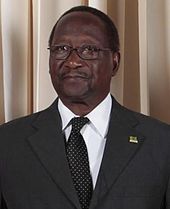
Dominica is a parliamentary democracy within the Commonwealth of Nations and, since 1979, a member of La Francophonie. The Commonwealth of Dominica is one of the Caribbean's few republics. The president is the head of state, while executive power rests with the cabinet, headed by the prime minister. The unicameral parliament consists of the 30-member House of Assembly, which consists of 21 directly elected members and nine senators, who may either be appointed by the president or elected by the other members of the House of Assembly.

Unlike other former British colonies in the region, Dominica was never a Commonwealth realm, instead becoming a republic on independence. Dominica is a full and participating member of the Caribbean Community (CARICOM) and the Organisation of Eastern Caribbean States (OECS).

Dominica is also a member of the International Criminal Court with a Bilateral Immunity Agreement of protection for the US military, as covered under Article 98. In January 2008 Dominica joined the Bolivarian Alternative for the Americas.

Dominica is divided into 10 parishes, given below with their 2011 Census populations:
Saint Andrew Parish (9,471)
Saint David Parish (6,043)
Saint George Parish (21,241)
Saint John Parish (6,561)
Saint Joseph Parish (5,637)
Saint Luke Parish (1,668)
Saint Mark Parish (1,834)
Saint Patrick Parish (7,622)
Saint Paul Parish (9,786)
Saint Peter Parish (1,430)

Bananas and other agriculture dominate Dominica's economy, and nearly one-third of the labour force works in agriculture. This sector, however, is highly vulnerable to weather conditions and to external events affecting commodity prices. In 2007, Hurricane Dean caused significant damage to the agricultural sector as well as the country's infrastructure, especially roads. In response to reduced European Union (EU) banana trade preferences, the government has diversified the agricultural sector by promoting the production of coffee, patchouli, aloe vera, cut flowers, and exotic fruits such as mango, guava, and papaya. Dominica has also had some success in increasing its manufactured exports, primarily soap.

CURRENCY
Dominica's currency is the East Caribbean Dollar.

TRANSPORT

AIR
There are two small airports on the island. The primary airport, Melville Hall Airport (DOM), is on the northeast coast and is about a 45-minute drive from Portsmouth. The second is Canefield Airport (DCF), about 15 minutes from Roseau on the southwest coast. Melville Hall Airport is suitable for limited use of commercial jets because of runway length. Melville Hall currently has regular service by BVI Airways, Winair, Seaborne Airlines and LIAT using twin turboprop aircraft like the ATR & Saab 340, as well as Conviasa and Amerijet, which, using Boeing 727 Freighters, is the only airline with jet service to the republic. A runway extension and service upgrade project began at Melville Hall around 2006 and was finished in 2010. In March 2013, airline American Eagle halted flights to the island citing high labor costs.

ROAD
The only major highway on the island is the road between Portsmouth and Roseau. It takes about 45 minutes to drive from Portsmouth to Roseau. Private minibuses form the major public transport system. However, this "highway" was under major reconstruction via help from the Chinese and was completed in April 2012.

MORE
The vast majority of Dominicans are of African descent. There is a growing mixed population, along with a significant Indo-Caribbean or East Indian groups, a small European origin minority (descendants of French, British, and Irish colonists) and there are small numbers of Lebanese, Syrians and Asians. Dominica is also the only Eastern Caribbean island that still has a population of pre-Columbian native Caribs, who were exterminated or driven from neighbouring islands. As of 2014 there are more than 3,000 Caribs remaining. They live in eight villages on the east coast of Dominica. This special Carib Territory was granted by the British Crown in 1903.There are also about 1,000 medical students from the United States and Canada who study at the Ross University School of Medicine in Portsmouth.

LANGUAGES
English is the official language of Dominica and is universally spoken and understood. However, because of historic French occupation during different times in history, and the island's location (it lies between the two French-speaking departments of Martinique and Guadeloupe), Antillean Creole, based on French, is spoken by many people on the island. The French creole language is particularly used among the older generation, which also speaks a language known as "patois". Because of a decline in its usage by the younger generation, initiatives have been set up in an effort to increase usage and promote this unique part of the nation's history and culture.

The dialect of Dominica also includes Kokoy, along with Creole—French-based patois. Cocoy, or Kokoy,is a mix of Leeward Island English Creole and Dominican Creole.It is mainly spoken in the north-eastern villages of Marigot and Wesley by immigrants from Montserrat and Antigua. Over time there has been much intermarrying, but there are still traces of difference in origin. As a result of this mixture of languages and heritage, Dominica is a member of both the English-speaking Commonwealth of Nations and the French-speaking La Francophonie.

Island Carib, also known as Igneri (Iñeri, Igñeri, Inyeri), was an Arawakan language historically spoken by the Island Caribs of the Lesser Antilles in the Caribbean. The Island Caribs lived throughout the southern Lesser Antilles such as Dominica, St Vincent and Trinidad, supposedly having conquered them from their previous inhabitants, the Igneri. It went extinct about 1920, but an offshoot survives as Garifuna, primarily in Central America.

RELIGION
About 80% of the population is Roman Catholic, though in recent years a number of Protestant churches have been established. There is also a small Muslim community in Dominica, and the nation's first mosque was built recently near Ross University.

CITIES & TOWNS OF DOMINICA
Rank Name Population.

1 Roseau 16,571
2 Portsmouth 3,633
3 Marigot 2,669
4 Berekua 2,608
5 Mahaut 2,369
6 Saint Joseph 2,184
7 Wesley 1,933
8 Salisbury 1,413
9 Castle Bruce 1,387
10 La Plaine 1,332

CUISINE
Dominica's cuisine is similar to that of other Caribbean islands, particularly Trinidad and St Lucia. Like other Commonwealth Caribbean islands, Dominicans have developed a distinct twist to their cuisine. Breakfast is an important daily meal, typically including saltfish, dried and salted codfish, and "bakes", fried dough. Saltfish and bakes are combined for a fast food snack that can be eaten throughout the day; vendors on Dominica's streets sell these snacks to passersby, together with fried chicken, fish and fruit and yogurt "smoothies". Other breakfast meals include cornmeal porridge, which is made with fine cornmeal or polenta, milk and condensed milk and sugar to sweeten. Traditional British-influenced dishes, such as eggs, bacon and toast, are also popular, as are fried fish and plantains.
Common vegetables include Plantain, Tania (a root vegetable), Yam, Potato, rice and peas. Meat and poultry typically eaten include chicken (which is very popular), beef, and fish. These are often prepared in stews with onions, carrots, garlic, ginger and herbs like thyme. The vegetables and meat are browned to create a rich dark sauce. Popular meals include rice and peas, brown stew chicken, stew beef, fried and stewed fish, and many different types of hearty fish broths and soups. These are filled with dumplings, carrots and ground provisions.

Dominica's cuisine is similar to many other Caribbean islands including that of Trinidad and St Lucia. Though separated by water Dominica like many other Commonwealth Caribbean islands have their distinct twist to their meals. Breakfast is an important meal in Dominica and is eaten everyday, typically eaten meals include saltfish which are dried and salted codfish and Bakes made by making a dough and frying in oil prove popular before a long days at work.

Saltfish and bakes however is also doubled up as a fast food snack that can be eaten throughout the day, vendors and Dominica's streets sell these snacks to passers by alongside Fried chicken, Fish and tasty smoothies. Other breakfast meals include cornmeal porridge which is made with fine cornmeal or polenta, milk and condensed milk and sugar to sweeten, more British influenced meals like Eggs, bacon and toast are also popular alongside fried fish and plantains. During Lunchtime or Dinner Common vegetables eaten are Plantain, Tania, Yam, Potato, rice and peas.

Meat and poultry typically eaten include Chicken (which is very popular), beef, fish which are normally stewed down with onions, carrots, garlic, ginger and herbs like thyme and using the browning method to create a rich dark sauce. Popular meals include rice and peas, Stew chicken, Stew beef, fried and stewed fish and many different types of hearty fish broths and Soups which are packed full with dumplings, carrots and ground provisions.

Roadside stands and small-town restaurants typically serve fried chicken, fish-and-chips and "tasty bakes" which are fried dough made with flour, water and sugar or sometimes salt, along with cold drinks. The island produces numerous exotic fruits, including bananas, coconuts, papayas, guavas, pineapples, and mangoes which can be eaten as dessert and be pureed or liquefied.

Dominica's national dish is the mountain chicken, which are snares of the legs of a frog called the Crapaud, which is endemic to Dominica and Montserrat. Found at higher elevations, it's a protected species and can only be caught between autumn and February.

BEVERAGES
Rivers flowing down from the mountains provide Dominica with an abundant supply of freshwater. Drinks include rum punch and freshly made smoothies.

Dominica tea culture has a long history. Many traditional medicinal teas have origins with the original Carib culture of the island. Dominica brews its own beer under the Kubuli label.