Showing posts with label embraer. Show all posts

Wednesday, 18 December 2019

CONGO DEM REP: Congo Airways Orders Two Embraer E175 AIrcraft

Embraer and Congo Airways have signed a firm order for two E175 aircraft, with purchase rights for a further two.

The deal has a total value of US$194.4 million at current list prices, with all purchase rights exercised.

Desire Bantu, chief executive of Congo Airways, said: These new jets will replace our current turboprop offering and allow us to serve routes both within the Democratic Republic of Congo, and regionally to west, central, and southern Africa, from our hub in Kinshasa.

“We will now have the flexibility and the right sized aircraft to serve our market, which is growing so rapidly an additional order may be required, for which the E2 is a particularly compelling option.”

The aircraft will be configured in a dual class layout seating 76 passengers in total, with 12 in business class.

Deliveries will begin in the fourth quarter of 2020.

Raul Villaron, vice president sales, Africa and Middle East, Embraer Commercial Aviation, said: “It’s great to welcome another airline to the Embraer family of operators, especially in Africa where the demand for regional travel is growing strongly.

“We look forward to supporting Congo Airways as they continue to upgrade their offering to their customers.”

Embraer is the world’s leading manufacturer of commercial aircraft up to 150 seats with more than 100 customers across the world.

Congo Airways, the flag carrier of the Democratic Republic of the Congo (DRC), is exploring the possibility of basing an aircraft in the neighboring country of Congo Brazzaville.

The airline recently grounded its fifth-freedom route from Kinshasa, DRC’s capital, via Douala in Cameroon to Cotonou in Benin, citing low passenger demand. But the two overseas markets could re-join the network as part of a five-point service originating in Brazzaville.

We want to open also Abidjan in Cote d'Ivoire and Libreville in Gabon, but according to our study we must connect Libreville to Brazzaville,chief executive Desire Balazire Bantu said.

If the aircraft goes Brazzaville, Libreville, Douala, Cotonou and Abidjan it will make a nice job.

The round trip could be completed in one day with two sets of flight crews, he added.

Congo Airways launched Kinshasa-Douala-Cotonou flights in December 2018 with a 160-seat Airbus A320. Management had hoped to serve the route with a 69-seat De Havilland Canada Dash-8 Q400, but settled for the larger jet due to maintenance and scheduling commitments elsewhere in the network.

The original routing is unlikely to be restored even if a Q400 becomes available, Balazire said, as the first leg can only attract about 35 passengers each way.

Opening a base in Brazzaville would also allow Congo Airways to launch flights to Bangui, the capital of the Central African Republic.

The airport asked us to go there, but there is no market for travel from Bangui to Kinshasa, he noted. But there is from Brazzaville to Bangui.

Congo Brazzaville has not had a flag carrier since 2016, when Equatorial Congo Airlines (ECAir) collapsed under a huge debt pile.

Two privately owned local airlines – Canadian Airways Congo and Trans Air Congo – maintain operations from the capital and Pointe-Noire.

Congo Airways launched in 2015 and currently deploys two A320s and two Q400s on flights between 14 airports in the DRC plus Johannesburg in South Africa.

Friday, 22 November 2019

BRAZIL: Azul Brazilian Airlines Renews Fleet

Azul Brazilian Airlines continued its fleet renewal last week when it received its first Airbus A321neo, the first of an order of 13. The aircraft, with a capacity for 214 passengers in a single-class configuration, is Azul’s largest narrow body and second A320neo family aircraft.

More than just being the delivery of a new airplane, though, the arrival of Azul’s first A321neo represents a landmark of a process the airline has been undertaking since 2016: the development of its ambitious fleet plan.

From its first flight in 2008, the airline relied solely on the Embraer 190 and 195 to position itself in the Brazilian market until 2011 when the ATR 72 came into play.

Benefitting from the then-empty Campinas/Viracopos Airport as a hub, Azul quickly grew as Brazil’s third-largest carrier in terms of traffic.

Little by little, however, the Embraer fleet started showing its shortcomings. Although having a smaller capacity than the Airbus and Boeing aircraft that its competitors operated, the aircraft lacked efficiency.

This was even more evident on larger flights. Brazil is vast, and Azul found it very difficult to operate longer flights with the Embraer in an efficient way.

That’s why in November 2014, with Brazil on the edge of an abyss that would show the biggest recession in the country since 1929, Azul made a big gamble, ordering 63 Airbus A320neos. The first one arrived in October 2016, starting operations that following December.

The A320neo quickly proved to be much more efficient than the E195. Even though the overall cost per trip of the Airbus is around five percent more than the cost of the Embraer, the cost per seat of the European aircraft is 29 percent lower since the A320 has 56 seats more than the E195, 174 against 118, the cost per seat of the European aircraft is 29 percent lower.

This allows Azul to increase its margins in markets that, during recent years, were matured by the Embraers, at the same time reducing the relative cost.

Abhi Shah, Azul’s Chief Revenue Officer, stated on a conference call, We could not have started Azul with large narrow bodies 10 years ago.

But now we have built a network that has enough feed and enough traffic that can fill Neos and so we are going to get the double benefit of improved fuel burn of the A320neo and more economies of scale.

This can be seen by the current routes served by Azul’s A320neos. The aircraft mostly connects high-density routes from Azul’s strongest markets to major Brazilian cities, as well as connects the carrier’s hubs — Viracopos, Confins and Recife — plus focus cities — Belem, Cuiaba, Curitiba, Goiania and Porto Alegre — to each other.

Apart from these, a big chunk of the routes connects the airline’s hubs — Viracopos/Campinas and Belo Horizonte/Confins — to cities in the north and northeastern regions of Brazil.

Before the Airbus, the airline could not connect these cities with as much efficiency as its competitors. The better unit cost brought by the performance of the A320neo on longer jaunts allow the airline to push further its capacity within these sectors.

The hub-and-spoke system is an important aspect of Azul’s network, so once these routes are connected with a stronger revenue and lower unit costs, all the other flights benefit from that in a kind of a chain reaction.

On the investors call for the third quarter of 2018, Abhi Shah stated that the A320 is driving great connectivity throughout our network and that is helping the smaller routes, the E-Jet routes, the ATR routes.

Another important aspect of Azul’s new fleet seat cost efficiency is that it makes the airline able to be in a good position when competing directly against LATAM and GOL, with the best example of in Guarulhos.

Before the introduction of the A320neo, Azul had a very small presence at Brazil’s largest airport. From August 2016 to August 2019, the revenue passenger kilometers (RPK ) grew from 131.1 million to 426.7 million, an increase of 225.4 percent.

Meanwhile, the domestic RPKs of Azul’s network increased 61.7 percent from 3Q 2016 to 4Q 2019. This means Azul grew four times more in Guarulhos than it has grown in the whole domestic market during the same period.

Azul’s CEO, John Rodgerson, previously stated that it is important to note that we have put some A320s in the Guarulhos airport because we have the most fuel-efficient aircraft in Latin America today, and with the lowest unit cost and lowest trip cost and its range.

So obviously in a more competitive market you are going to put your best-performing asset.

Sunday, 3 February 2019

USA: American Airlines Takes Its First Airbus A321neo Aircraft Of 100 Ordered

American Airlines has received its first of 100 ordered Airbus A321neo aircraft, which will replace the aging Boeing 757-200 and McDonnell Douglas MD-83 aircraft in its fleet.

The airline’s first Airbus A320neo family jet departed from Hamburg Finkenwerder early Friday for its ferry-flight to Pittsburgh, where American Airlines’ technicians will prepare the airplane for its entry into service.

In 2018, the airline reached an agreement with Airbus to defer the delivery of 22 A321neo aircraft that were previously scheduled for delivery in 2019, 2020 and 2021.

American Airlines, a founding member of the oneworld airline alliance, currently operates a mixed fleet of various Airbus, Boeing, Embraer and McDonnell Douglas aircraft. The airline is the largest operator of the Airbus A321 in the world.

Many airplanes in the fleet, for example the Boeing 757-200s, 767-300s or the MD-83 jets, are older than 20 years. Therefore, the carrier started the largest fleet renewal in its history to replace older planes with newer, fuel-efficient aircraft.


Tourism Observer

Sunday, 23 December 2018

BRAZIL: Court Rules Out Injunction On Boeing-Embraer Marriage

A Brazilian court on Saturday shot down a fresh injunction by a judge over a plan by planemakers Boeing of the US and Embraer of Brazil to create a $5.26-billion joint venture.

It was the second time this month an appeals court has overruled decisions by a Sao Paulo judge, Victorio Guizio Neto, seeking to temporarily block the deal.

The higher court said on Saturday it was not up to Guizio Neto to decide the future of the proposed joint venture, noting that the Brazilian government held a golden share in Embraer that allowed it to veto strategic decisions if it wished.

Embraer, the third-largest aircraft manufacturer in the world, was founded as a state group in 1969 before being privatized in 1994, though with Brasilia retaining the golden share.

Under the planned deal, Boeing is to take an 80 per cent stake in Embraer's commercial business, thus allowing it to offer planes with capacity of up to 150 seats — a market in which Boeing currently does not compete.

Embraer's military aircraft business was excluded to overcome Brazilian government opposition to giving up a national security asset to a foreign entity.

When the two planemakers originally announced their deal in July this year, they said they expected to wrap up the transaction by the end of 2019.

Judge Guizio Neto two weeks ago ordered the accord be put on ice until the next government, which takes office January 1 under president-elect Jair Bolsonaro, has a chance to examine it.

That was overturned by an appeals court four days later.

Then on Thursday Guizio Neto issued a new injunction at the request of unions working in Embraer's Sao Paulo factories.

The reversal on Saturday was a sharp slap-down to that.

The judicial back and forth has had a yo-yo effect on Embraer shares, sending them into the red with each injunction only for them to recover when the appeals court steps in.

After the first injunction was overruled, the two planemakers said they were forging on with their deal subject to approval by the government of Brazil.

Meanwhile, US planemaker Boeing on Friday said it had agreed deals worth an overall $9.3 billion to sell 50 jets to Nigeria's Green Air and 30 to Saudi carrier flyadeal.

The company lauded the Nigeria accord, which includes a further 50 options, as the largest signed to date in Africa.

As with the Saudi deal, the Nigerians are purchasing single-aisle 737 MAX planes.

While flyadeal has been operating new Airbus A320s, the airline says it has selected the 737 MAX for the future, Boeing said in a statement.

The firm noted its first deliveries to Saudi Arabia were in 1945, as those DC-3 aircraft gave birth to commercial air travel in the kingdom.

Flyeadeal is a subsidiary of Saudi Arabian Airlines and flies to a range of domestic destinations across the kingdom.

Boeing quoted the director general of Saudi Arabian Airlines, Saleh bin Nasser Al-Jasser, as saying: The demand for air transport services in the domestic market of the Kingdom of Saudi Arabia has grown exponentially, adding flyadeal had ambitions eventually to cover new markets outside of Saudi Arabia.

The flyadeal is for the 189-seater 737 MAX 8, whose operating costs Boeing said were eight percent lower than the carrier's current fleet of Airbus A320s.

If all the purchase options are exercised, the two deals unveiled Friday will be worth around $17.6 billion at list prices.

Green Airways owner Babawande Afolabi said the Nigerian end of the deal was a strong sign of growing African entrepreneurial dynamism and resilience.

Boeing saw that deal as a step towards construction of a solid Pan-African network, adding the Africa aviation sector has exceptional potential.

Since launching the 737 MAX Boeing said it has received more than 4,800 orders from more than 100 customers worldwide.

European rival Airbus said earlier this month it had 380 net orders for planes from January to November with 673 deliveries over that period.

Boeing said it had landed 631 orders between January and September.


Tourism Observer

Friday, 29 June 2018

AZERBAIJAN: Buta Airways Goes To Russia

Buta Airways, a newly founded low-fares subsidiary of Azerbaijan’s national aviation holding AZAL, has announced seven new destinations to be added to its route network. Three of these are in Russia.

Buta has launched flights from its base at Heydar Aliyev Airport in Baku to Moscow’s Vnukovo. AZAL currently operates this route as Azaljet. The other two planned destinations in Russia are Kazan and Mineralnye Vody.

Buta will also fly to Antalya (Turkey), Kyiv (Ukraine), Tbilisi (Georgia), and Tehran (Iran). With the beginning of the winter schedule on October 29 the carrier will add flights to St. Petersburg and Istanbul.

Azerbaijan’s first LCC is gearing up to operate its first commercial flight, to Tbilisi, on September 1. Sales will be launched shortly, the airline says, adding that one-way air fares will start at 29 euros.

The least expensive tickets will be non-refundable. Standard-rate tickets will be refundable at a 50% fine.

The airline will offer a standard set of extra paid options, such as hold and carry-on baggage, hot meals on board, and the choice of seat. Water and sandwiches will be offered free of charge.

Buta Airways was founded in December 2016. It currently has one Embraer Е170LR and four Embraer Е190s. The airline’s brand livery was presented in June 2017


Tourism Observer

Wednesday, 27 December 2017

SAUDI ARABIA: Ex-Embraer Executive Guilty In Bribery Case

A former executive at Brazilian aircraft manufacturer Embraer pleaded guilty on Thursday for his role in bribing a Saudi official in the sale of three jets, the US Justice Department announced.

Colin Steven, a 61-year-old British national residing in the United Arab Emirates, admitted to charges of foreign bribery, wire fraud, money laundering and false statements over his role in the scheme, which occurred between 2009 and 2011.

Steven’s guilty plea follows Embraer’s $205 million settlement last year with US and Brazilian authorities over corruption in several countries, including Saudi Arabia.

In an unrelated development, Embraer announced Thursday it was in merger talks with the US giant Boeing but said no deal was guaranteed.

Prosecutors say Steven, a former executive in Embraer’s executive jets division with responsibility for sales in the Middle East, agreed in 2009 to funnel bribes to an official of Saudi Arabia’s state-owned oil company in return for help in securing the sale of three new jets to the company.

Following the $93 million sale in 2010, Steven caused Embraer to pay a South African company more than $1.5 million in sham finder’s fees, almost all of which it then passed on to the unnamed Saudi official.

Steven kept $130,000 in kickbacks, according to the Justice Department, but lied to a Federal Bureau of Investigation agent in 2014, claiming this sum was really for an unrelated business venture.

US law criminalized the use of bribes of foreign government officials to win business, and this applies to companies whose stock is traded in or who do business in the United States and to their employees, extending the reach of the US justice system.

Steven is due to be sentenced in June of next year. The charges carry a maximum penalty of 90 years in prison but the sentence is likely to be far lower.


Tourism Observer

Tuesday, 11 April 2017

USA: GE Capital Aviation Services (GECAS)

GE Capital Aviation Services (GECAS) is an Irish-American commercial aircraft financing and leasing company.

It is the largest commercial airline leasing/financing company in the world.

It is part of GE Capital, a company of the large conglomerate General Electric.

GECAS buys aircraft from manufacturers like Airbus and Boeing and then leases them to airlines, typically on eight year leases, usually on dry lease contracts.

It also buys aircraft from airlines and leases them back.

The company has three global headquarters, located in Singapore; Shannon, County Clare and Norwalk, Connecticut.

The primary competition for GECAS is AerCap, although other companies such as Air Lease Corporation, Aviation Capital Group, BBAM and SMBC Aviation Capital also compete with it.

GECAS has a fleet of over 1800 aircraft, used by 245 airlines.

Nearly all aircraft owned by GECAS are powered by engines from either GE Aviation, another subsidiary of General Electric, or CFM International, a GE Aviation/Snecma joint venture.

GECAS was formed in 1993 to manage the assets bought from the Irish-based Guinness Peat Aviation.

The company GE Capital Aviation Services Limited was based in Ireland and originally staffed by former GPA employees.
GE Capital also incorporated the California-based Polaris Aircraft Leasing into the group.

GECAS also owns a minority stake in Oxford Aviation Academy retained when they sold 80%,before dilution, of GECAT to STAR Capital Partners in 2007.

In 2015, GECAS took over the Irish-based Milestone Aviation to add helicopters to its leasing portfolio.

GECAS maintains a portfolio of narrow body and wide body passenger aircraft, cargo aircraft, and regional and turboprop aircraft from manufacturers Boeing, Airbus, Embraer, Bombardier and ATR.

Through its Milestone Aviation Group, GECAS also owns and leases AgustaWestland, Sikorsky and Airbus Eurocopter helicopters.

Customers finance these aircraft through the following GECAS offerings:
• Operating leases
• Purchase leaseback agreements
• Secured loans
• Aircraft servicing

Additionally, GECAS buys, leases and finances aircraft engines from GE and CFM, as well as from manufacturers Rolls-Royce, Pratt & Whitney, IAE and Engine Alliance.

GECAS provides the following for its engine pool:

• Operating leases
• Short-term leases
• Purchase leaseback agreements
• Secured loans
• Engine exchange
• Engine servicing
GECAS distributes recertified engine and aircraft parts through its Asset Management Services group.

The company maintains an inventory of parts from Airbus, Boeing, Douglas and Bombardier aircraft that have been overhauled, repaired or modified and distributes these parts from warehouses in North America, Europe and Asia.

GECAS also operates AviaSolutions, which provides aircraft consultancy services to airports, investors and financial institutions, governments and airlines.

AviaSolutions advises clients on business development, route development, infrastructure planning, airline management, regulations, and various other projects.

Monday, 16 January 2017

Embraer Meets Targets

Embraer delivered 32 commercial and 43 executive jets, 25 of which are light jets and 18 are large, during the fourth quarter of 2016 (4Q16).

The Company ended the year with 108 aircraft delivered to the commercial aviation market and 117 to the executive aviation market, totaling 73 light and 44 large executive jets. These numbers are aligned with the estimates reported to the market throughout the year (105 to 110 commercial jets, 70 to 80 light executive jets and 35 to 45 large executive jets).

The total of 225 aircraft for these two markets represents the highest volume of deliveries in the last six years. As of December 31, the backlog totaled USD 19.6 billion.

“2016 was a year of major challenges in the aviation industry due to global economic and political uncertainties. In response to this scenario, Embraer is implementing important actions and making adjustments to be well positioned in all business segments it operates,” says Embraer President & CEO, Paulo Cesar de Souza e Silva. “In executive aviation, for example, we now have a stronger presence with larger executive jets, which indicates a more balanced mix.”

Wednesday, 11 November 2015

SAUDI ARABIA: Saudi Arabia Hosts Largest Fleet Of Private Jets In Middle East


With a total of 164 business jets, the Kingdom of Saudi Arabia has 35 percent of all the registered planes in the Middle East, it was disclosed in a recent report on business aviation in Saudi Arabia presented at the Middle East Business Aviation Conference (MEBAC) in Riyadh by the Middle East Business Aviation Association (MEBAA) and WINGX.

At least 45 of the fleet have been added since the year 2000.

The insights highlighted flight patterns, purchase preferences and charter trends from Riyadh, Jeddah and Dammam King Fahd Airports, which all contributed to 29,869 aircraft movements in 2013.

Bombardier, Airbus and Embraer, the report says, had sold the most jet engine aircrafts since the year 2000. However, Boeing still maintains the strongest presence with 38 jets registered across 10 countries in the Middle East.

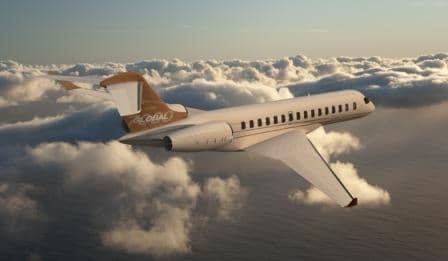
Within the Saudi Arabian charter market the results are very different with the Gulfstream V, Hawker Beechcraft 700-800 and the Bombardier Global Express being the most popular choice amongst customers, the majority of whom are flying to Le Bourget, Geneva, and Istanbul.

Speaking on the side-lines of MEBAC Riyadh, Ali Al Naqbi, MEBAA’s founding chairman, said: “In order for the association to lobby and promote business aviation amongst local officialdom in Saudi Arabia, we must have reliable data that illustrates its contribution to the aviation economy.

Our partnership with WINGX has provided us with the necessary intelligence and emphasized the need for CAA support that will help sustain such impressive growth in the market.”

Richard Koe, managing director of WINGX, said: “Having the largest installed fleet of business jets in the Middle East points to the importance for MROs and operators to be based in Saudi Arabia.

Likewise the average age for aircraft in Saudi Arabia is 13.5 years and therefore there is also a tremendous opportunity for OEMs to tap into the 12% year on year increase that MEBAA is forecasting for business aviation in Saudi Arabia.”

Saturday, 29 August 2015

KAZAKHSTAN: Air Astana To Fly To Dubai In October

Air Astana, Kazakhstan’s flag-carrier, has confirmed it will re-launch services between Astana and Dubai on October 25th.

The non-stop flight will be operated four times a week on Mondays, Tuesdays, Fridays and Sundays using an Airbus A320.

The service from Dubai to Astana offers greater convenience to Dubai based passengers as well as those located in Astana, Kazakhstan.

Additionally, timely connections will be offered to international transit passengers travelling from Urumqi (China), Omsk (Russia) and Bishkek (Kyrgyzstan).

“Air Astana is fully committed to expanding the route network from Astana, with the re-launch to Dubai following the recent introduction of new services from the capital to Paris, Seoul and Tbilisi,” said Peter Foster, president, Air Astana.

“With Kazakhstan and UAE enjoying strengthening links in business, finance, tourism and culture, I’m confident that the new service will be extremely popular with passengers travelling between Astana and Dubai.”

The minimum cost of a round trip economy class ticket from Astana to Dubai, including all fees, is US$ 468 and a business class ticket is US$ 2,107 during low season and US$ 2,667 during high season.

Tickets can be booked at the Air Astana website www.airastana.com, where UAE visas can also be issued.

Air Astana commenced regular flight operations on May 15th 2002 and currently operates a network of over 60 international and domestic routes from hubs in Almaty and Astana.

Air Astana operates a fleet of 30 aircraft including three Boeing 767-300ER, five Boeing 757-200, thirteen Airbus A320 family aircraft and nine Embraer E-190.

Both accolades were repeated in 2013, 2014 and 2015.

Air Astana is a joint venture between Kazakhstan’s national wealth fund, Samruk Kazyna, and BAE Systems, with respective shares of 51 per cent and 49 per cent.